What Can I Learn in an Audition Coaching Session?
Auditioning is a separate skill from acting. That sentence trips people up, because they assume that if you can act, you can audition. You can't, not automatically, any more than being a good driver makes you a good parallel parker. They overlap, but the audition is its own narrow, high-pressure craft, with its own rules, its own format, and its own ways to win and lose. Most actors never train it directly. They train acting and hope it transfers.
An audition coaching session trains the audition itself. It's targeted, it's built around your actual material, and increasingly it's built around your actual self-tape — the file that, more and more, is the only thing casting will ever see of you. Here's what changes when you train it on purpose.
Want to work with me one-on-one?
A coaching session is not a class
The first thing to understand is the format, because it's the format that makes the difference. A group class works a general scene with a general goal. An audition coaching session works your specific sides, for your specific role, with the specific casting deadline in mind. It's not theory. It's preparation for a particular room you're walking into this week.
And it's built on reps. I've said it elsewhere and I'll say it again here, because it's the whole reason coaching works: in how many settings do you actually work your material at least four times in a session? The first pass is you finding the scene. The second is you making a choice. By the fourth or fifth pass, you've found something casting will actually remember — and that's the version we send. A single rushed read on your own at home is almost never your best work. Coaching is where you get to the fourth pass before casting ever sees the first.
Make the choice specific enough to describe in one sentence
The fastest way to lose an audition is to play it safe. Actors hedge under pressure — they deliver competent, pleasant, non-committal readings, hoping vagueness is safer than a bold choice that might be wrong. Vagueness is the worst choice you can make, because casting has seen ten thousand vague reads today and will forget yours instantly.
So a coaching session forces a specific choice. The test I use: if you can't describe your choice in one sentence, it isn't specific enough. I'm trying to make this person feel small. I'm desperately trying to seem casual about something that's killing me. I've already decided I'm leaving, and this is just the last conversation. The casting team never needs to hear your sentence. You need to know it, because a clear internal choice produces a clear, committed read. A memorable, slightly strange, fully-committed choice beats a flawless vague one every single time, even when casting decides it's not right for the role.
Nerves are a green light, not a warning
Here is the reframe that changes everything about how you perform under pressure. Most actors treat their nerves as a sign that something is wrong. The racing heart, the shallow breath, the hyperalert focus, the slight tremor — they read all of it as fear, and fear makes them shrink.
But look closely at those sensations. They are physically almost identical to excitement. Racing heart, sharpened focus, energy surging through the body. The only difference between fear and excitement is the story you tell yourself about the feeling. So in a session, we change the story. I'm activated. I'm engaged. This is what showing up feels like. That's a different internal monologue than I'm scared and I'm going to mess this up, and it produces a completely different performance from the exact same body. Treat the nerves as a green light — your system telling you this matters and you're ready — instead of a red one.
We also anchor the body physically. Before a read, drop three slow breaths low into the belly, not the shoulders. Roll the shoulders back and down. Soften the jaw. Feel your feet on the floor. These are the same anchors I give singers before a performance, and they work for the same reason: they tell your nervous system this is a prepared moment, not a dangerous one.
The self-tape is the audition
For most roles now, you will never be in a room. You record a tape and send it, and the entire decision about whether you advance is made on that file. The actors who treat the self-tape as a casual phone clip are getting beaten, every round, by the ones who understand that the technical quality of the tape is part of the performance.
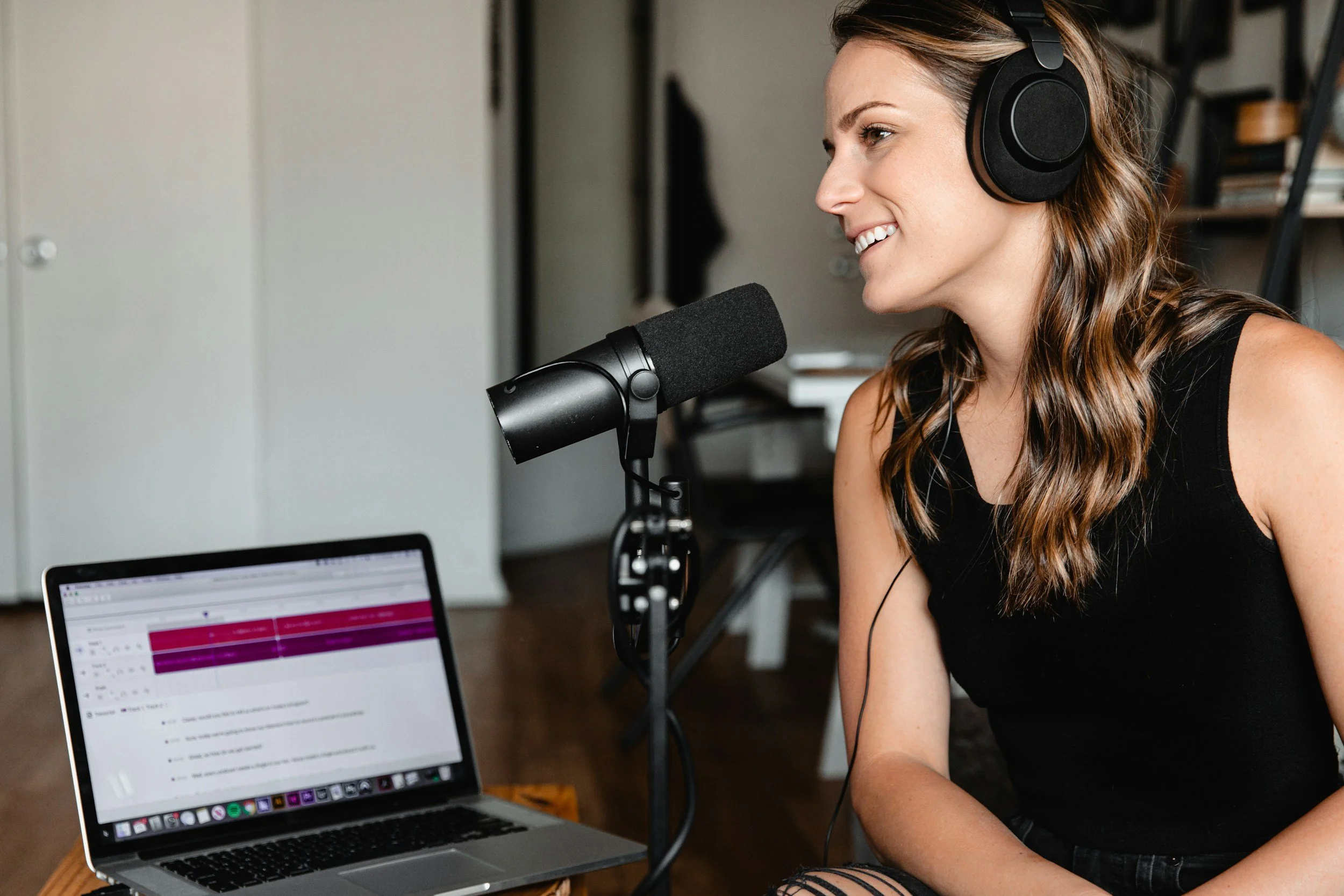
Casting forms a judgment in the first three seconds, and most of it is technical: Can I see this face clearly? Can I hear them clearly? Does this person look like they take the craft seriously? If the answer to any of those is no, they're scrolling to the next submission before your first line lands. A coaching session covers the three pillars of a tape casting will actually watch — sound, light, and frame. You don't need a studio. You need a setup you've dialed in that you can deploy in twenty minutes when a notice drops. And of the three, fix sound first, because poor audio is the fastest disqualifier there is.
The point of working this in a session isn't to turn you into a video engineer. It's to make sure the performance you worked four times actually reaches casting intact, instead of getting buried under hum and shadow.
Slate it like a person, and own your bookends
Small details carry enormous weight in the first and last moments of a tape, and we drill them specifically.
The slate — saying your name and any direction at the top — is the first impression, and most actors throw it away with a flat, nervous recitation. A warm, present, grounded slate tells casting you're a real person who's comfortable in your skin before you've acted a single line. Then there are the bookends: your first line and your last line. The first line sets the impression. The last line resolves it. Both should be delivered with full presence and strong eye-line, never buried in the page — everything in between can involve glances down at your sides, but the bookends are owned completely.
Take the redirection, and give them range
If you do get a redirect — on a tape with a reader, or in a callback — there's a specific skill in how you take it, and casting is testing it on purpose.
When they say "try it angrier" or "more vulnerable," the instinct is to nod and deliver something ten percent different. The note was asking for fifty percent. Give them the fifty. Make the adjustment visible. Casting has already decided whether they like you; what they're testing now is whether you can deliver different colors on command, because the actor who shifts dramatically on a single note is the one who's useful on set when the director needs three takes. A coaching session is where you rehearse taking strong adjustments, over and over, so it's automatic when it counts.
Play the relationship, not the camera
Most self-tapes fail in a quiet way that has nothing to do with the lines: the actor is performing at a lens instead of relating to a person. The eyes go dead and presentational, the read turns into a recitation, and casting feels the absence of a real human exchange even if they can't name it. Acting is reacting, and you can't react to a camera. You can only react to a person, so the whole game is building one for the lens to catch.
That starts with your reader, the person feeding you the other lines off-camera. A good reader is worth a lot, and how you treat the exchange matters more than beginners think. Listen to your reader and genuinely let their lines land on you, instead of waiting through them for your turn to talk, because the moment your read becomes a series of speeches separated by polite pauses, it dies. Even when your reader is flat and gives you nothing, your job is to respond as if they gave you everything, manufacturing the genuine reaction the scene needs from your own imagination.
Eye-line is the technical piece we dial in. Your reader should sit just to the side of the lens, close to it, so your eyes stay open to camera while you play the scene to a real person rather than staring blankly down the barrel. We place that eye-line deliberately, usually just off one side of the camera, and we keep it consistent so casting isn't distracted wondering where you're looking. The bookends still get owned with full presence, but everything in between is you, present, reacting to someone real. A coaching session is where we set the eye-line, work the listening, and make sure the tape captures an actual relationship instead of a person talking at a phone.
The math behind a yes
The last thing a coaching session gives you is perspective, and it's the thing that keeps you in the game long enough to win. You are going to lose most of your auditions, and that is not a verdict on your talent. It's arithmetic.
Think of it like push-ups. Five push-ups won't build a chest, but you still have to do five to get to six, and you cannot skip to a hundred. Auditions are the same. Most performers book somewhere around their fortieth to sixtieth audition; a booking at twenty is lucky. So if you've done a handful and booked nothing, you are completely normal — you just haven't done the reps yet. The actors who make it are the ones who understood the math early enough not to quit at audition number eight. A coaching session makes each rep count for more, so you climb that curve faster, but the curve is real and you have to walk it.
So here's where to begin. Before you submit your next self-tape, run the scene four times and pick the boldest, most specific choice — the one you can name in a single sentence. Reframe the nerves as a green light. Own your slate and your bookends. Then, if you want the version casting replays, bring that tape into a session before you send it, and let's find your fourth pass together.
Want to work with me one-on-one?
Looking for more?