Preparing a Monologue for a Film Audition: The Frameworks That Actually Help
The film audition monologue is a strange artifact. You're delivering material in isolation, often without a scene partner, often without context for the larger work, often through a phone camera in your living room. Yet this brief performance is what stands between you and the role. Whether you book the work depends on whether your monologue communicates that you're the right performer for the part.
Most actors prepare monologues through repetition. They run the lines until they have them memorized. They make general choices about delivery. They record takes and submit them. The process produces serviceable performances but rarely standout ones. The difference between serviceable and standout typically comes from specific frameworks that organize how you analyze and prepare the material.
Let's walk through the frameworks that consistently produce stronger monologue performances. These are the tools working actors use to break down material, find emotional depth, and deliver performances that distinguish them from other auditioners.
Want to work with me one-on-one?
The PPP Framework: Pitch, Pace, Projection
The single most useful framework for adding variety to monologue performances is what I call the three Ps: pitch, pace, and projection.
Most amateur monologue performances stay relatively consistent across these three dimensions throughout the piece. The actor speaks at one general pitch level, at one general speed, at one general volume. The result is performances that feel flat regardless of how committed the emotional content might be.
Working actors vary all three dimensions deliberately throughout a monologue. Pitch rises and falls. Pace speeds and slows. Volume builds and pulls back. The variation creates texture and prevents the audience's attention from drifting.
Pitch Variation
Pitch is the high-low dimension of your voice. Within a monologue, deliberate pitch variation serves specific functions:
Pitch up for: questions (especially genuine ones), moments of surprise or discovery, lighter content, rhetorical emphasis, emotional vulnerability.
Pitch down for: serious revelations, threats or intensity, authoritative declarations, weighted emotional moments, conclusions.
For each line in your monologue, ask whether pitch variation could add interest. Mark spots where pitch should rise or fall. Then deliberately exaggerate the variation in practice. The exaggerated version trains your muscle memory; you can dial it back to natural-sounding levels in performance.
A common mistake: defaulting to a slightly elevated pitch throughout because it feels more "performance-y." This produces monotonous monologue delivery that fights against rather than supports emotional content.
Pace Variation
Pace is the speed of delivery. Beginners typically deliver monologues at a relatively consistent pace, often faster than the material wants.
Slow down for: loaded emotional moments, the lead-in to revelations, character realizations happening in the moment, moments of struggle to find words, threats or intensity.
Speed up for: excitement or anxiety, lists of items, dismissive content, moments where the character is hiding from feeling.
Use pauses strategically: before loaded lines to build tension, after important moments to let them land, mid-phrase to create thoughtfulness or hesitation.
Pauses are a specific tool worth emphasizing. Many monologues live or die based on how well actors handle silence. A well-placed pause carries enormous emotional weight; a missed pause skips over the moment that should have landed hardest.
Projection Variation
Projection is the volume dimension. Like pitch and pace, beginners tend toward consistency. Working actors vary their projection deliberately.
Project louder for: emotional peaks, climactic lines, moments of authority or anger, breakthroughs in the emotional arc.
Pull back quieter for: vulnerable moments, intimate revelations, threats delivered with restraint, devastating realizations.
The most powerful monologue moments often involve dynamic contrast: a sudden drop to whisper after building intensity, a sudden burst of volume after sustained quietness. The contrast itself creates emotional impact.
Applying PPP to Your Material
For each monologue, work through the text marking deliberate choices about all three dimensions:
Where does pitch rise? Where does it fall?
Where does pace slow? Where does it speed up? Where do pauses live?
Where does projection build? Where does it pull back?
This analytical work feels mechanical at first. With practice, it becomes intuitive. Actors who internalize the framework eventually stop having to consciously mark scripts because the variation happens naturally. But the analytical work in your developmental years creates the foundation for the eventual intuition.
The Plutchik Color Wheel: Emotional Variety
The second framework that transforms monologue performances: the Plutchik wheel of emotions, used as a tool for analyzing and adding emotional variety.
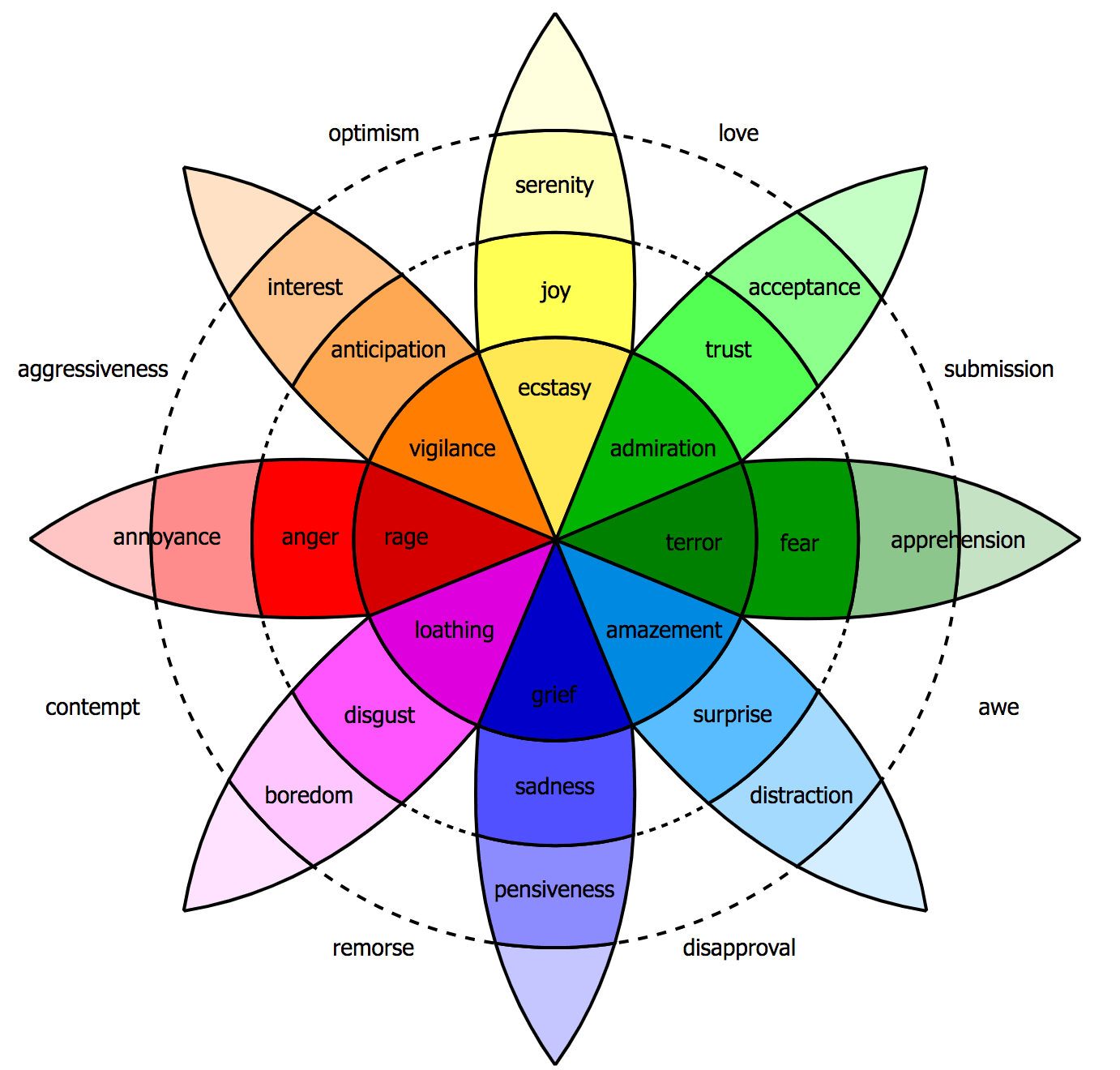
Robert Plutchik was a psychologist who developed a comprehensive model of human emotions arranged on a wheel. The model identifies eight primary emotions (joy, trust, fear, surprise, sadness, disgust, anger, anticipation) along with the variations and combinations that create the full spectrum of human emotional experience.
For actors, the Plutchik wheel becomes a tool for identifying emotional variety beyond the obvious dominant emotion of any given scene.
The Sunset Analogy
A useful way to think about emotional variety in performance: a sunset isn't just one color.
When you look at a sunset, you don't see only orange. You see oranges, yellows, reds, pinks, purples, blues, sometimes greens. The richness of the sunset comes from the variety of colors interacting. If you painted a sunset using only one color, the painting would feel impoverished regardless of how vivid that single color might be.
Emotional content works the same way. A "sad" scene isn't just sadness. It contains anger about the situation. Fear about what might happen next. Confusion about how things got this way. Maybe brief flashes of memory that bring different emotions. Maybe relief at finally being able to express what's been suppressed. The "sad" is only the dominant color; the actual emotional landscape contains many more.
When actors play scenes using only the dominant emotion, the scenes feel flat. When actors find the additional emotional colors woven through the dominant one, the scenes feel real.
Applying the Wheel to Monologues
For any monologue you're preparing, identify:
The dominant emotion. What's the primary emotional color of the scene? Sadness, anger, joy, fear?
The secondary emotions. What other emotional colors appear at specific moments throughout the monologue? Where does anger flash through sadness? Where does fear interrupt joy? Where does guilt complicate anger?
The transitions between emotional colors. When does the character shift from one emotional state to another? These transitions are often the most important moments in a monologue, because they show the character's emotional journey rather than a static state.
Mark your script with these emotional notations. Different colored highlighters can literally mark different emotional territories. Practice the monologue with conscious attention to hitting each emotional moment with the appropriate color.
The result is performance that feels three-dimensional rather than flat. Audiences feel the shift between emotional states. They follow the character's emotional logic rather than just observing one prolonged emotional state.
The Held-Back Tears Technique
A specific technical area worth dedicated attention: how to deliver emotionally vulnerable scenes without sabotaging your performance through actual crying.
Many actors approach emotional scenes by trying to produce real tears. The instinct makes sense: real crying is undeniably real, and you want your performance to be undeniably real. But the technique often backfires.
When you actually cry during a take, several problems emerge:
Your voice becomes unreliable
Mucus production affects audio quality
Your face becomes blotchy in ways that may not look right on camera
Your emotional state can leave you depleted for subsequent takes
The crying takes on its own life and may not match the specific emotional content of the scene
The professional approach: show the effort to hold back tears rather than making tears happen.
The audience doesn't actually need to see you cry to feel emotional impact. They need to see you struggling against emotion. The fight against breaking down often creates more impact than the breakdown itself.
How to Show the Resistance
Specific techniques that convey held-back tears without producing actual crying:
Catch in the breath. A small audible inhale right before a difficult word or phrase, as though the emotion almost overwhelmed you.
Tightness in the throat. Letting your throat constrict slightly so words come through with strain. This produces the audible quality of suppressed emotion without requiring actual tears.
Slight pitch wobble. A subtle instability in your pitch on key words signals that you're barely keeping it together. The instability is small but readable.
Quick blinks or longer eye holds. Visual cues that suggest you're fighting tears without producing them. Quick blinks suggest moisture. Longer eye holds suggest deliberate effort to maintain composure.
Brief moment of looking away. A quick glance to the side, downward, or briefly closing your eyes can suggest the character can't quite face the moment. This is small but powerful.
Words that catch. Starting a word and almost not making it through. The word emerges, but with audible effort. Particularly powerful on names or loaded words.
These techniques can be practiced and deployed reliably. They don't depend on emotional state; they depend on technical execution. Once you've developed access to them, you can produce the impression of held-back tears on demand without compromising your voice or your subsequent takes.
The Dancing Around Strategy
A related principle: for emotionally loaded monologues, dance around the most intense moments rather than charging straight at them.
The instinct of many beginning actors is to deliver emotional content full force. The character feels sad, so the actor cries from the first line. The character feels angry, so the actor explodes immediately.
This approach often produces less impact than starting more contained and building toward the emotional peaks. The audience needs to be brought into the emotional state gradually. They need to see the character trying not to feel what they're feeling. They need to watch the resistance crack rather than seeing the resistance already broken.
For a monologue with a devastating central admission, consider:
Starting from a more composed place
Letting the difficulty of the situation slowly emerge
Building to the central moment through resistance
Letting the resistance break at the most loaded line
Pulling back into a different emotional space afterward
This shape (composed → cracking → breaking → recovering) produces more emotional impact than maintaining devastation throughout. The contrast between states is what creates the impact.
Understanding Why the Scene Is Happening
A specific analytical step that improves monologue performances dramatically: figure out why the scene is happening at all.
Most monologues exist because something has brought the character to this moment of speaking. Why is this conversation happening now? What event preceded this moment? Who initiated this interaction? What does the character want from the listener?
These questions are often answerable from context, but they need to be answered explicitly during preparation. The answers shape your performance choices.
For a monologue where a student is speaking to a guidance counselor about academic struggles:
Did the counselor call the meeting, or did the student request it?
If the counselor called the meeting, what concerns prompted them?
If the student requested it, what tipped the student into reaching out for help?
What does the student want from this conversation? Reassurance? Practical advice? Permission to feel their feelings? Recognition of how hard they've been trying?
What does the student fear from this conversation? Being told they're not smart enough? Being given advice that won't actually help? Being judged?
The same monologue performed with different answers to these questions becomes different performances. A student who reluctantly came because the counselor called the meeting plays the scene very differently than a student who requested help in desperation. Both readings are valid; both produce specific performance choices.
For each monologue you prepare, write out your specific answers to these questions. Don't rely on vague impressions. Specify exactly what you've decided. The specificity drives specific performance choices.
Reference Performance Analysis
A specific developmental practice: study how skilled actors handle similar emotional territory to your monologue material.
Watching reference performances trains your sense of what works in emotional scene work. You see how working actors handle the technical challenges of vulnerable moments. You see how emotional variety plays in finished performances. You absorb craft principles by watching them executed well.
For monologues involving emotional vulnerability, particular performances worth studying include:
Will Smith in The Fresh Prince of Bel-Air, "How come he don't want me, man?" scene. This brief moment is one of the most studied emotional scenes in television history. Will Smith builds from contained anger through escalating intensity to a devastating emotional break, then pulls back to a place of resignation. The arc demonstrates how to build to a climax and then move away from it. The technique of showing the fight against tears, the breath control during emotional breaking, the variety of emotional colors woven through one prolonged scene—all of these are visible in this performance.
The specific skill worth studying: building to a bigger emotional climax than feels comfortable, then pulling back rather than maintaining peak intensity.
For developing actors, watching this scene multiple times with different focus points (technical execution, emotional choices, physical adjustments, vocal variety) trains your understanding of how skilled actors handle similar moments.
Other reference performances worth studying for monologue work include scenes from theatrical traditions where actors deliver extended emotional content (August: Osage County, Doubt, Rabbit Hole), films known for strong monologue moments (Network, A Few Good Men, Good Will Hunting), and television performances where actors handle vulnerable scenes well (This Is Us, The Crown, various dramatic series).
Build a small library of reference performances you return to repeatedly. Each viewing reveals new technical details. Over time, you absorb craft principles that influence your own work.
Famous Actor and Celebrity Audition Tapes and Screen Tests
The Self-Taping Discipline
A specific practical area for film audition monologues: the discipline of self-taping.
Self-taping is its own skill, distinct from acting itself. The technical setup, the on-camera adjustments, the multiple-take strategy, all of these require deliberate development.
Setup Essentials
For self-tape monologues:
Film horizontally, not vertically. Camera should be in landscape orientation. Vertical phone footage looks unprofessional.
Frame from upper chest to slightly above your head. Tight enough to capture facial expressions, loose enough to avoid claustrophobia.
Use stable mounting. A tripod, a stand, or a creative solution involving books and tape. Handheld phone footage shakes in distracting ways.
Light evenly from the front. A window in front of you (during daylight) or a basic ring light produces flattering even illumination. Backlight or top light produces unflattering shadows.
Keep the background simple. A plain wall or simple curtain. Not your messy bedroom, not a kitchen with appliances visible, not anywhere busy.
Record audio carefully. Phone microphones at close range work adequately for self-tapes. Record in a quiet space without HVAC running, traffic noise, or pets making sound.
The First-Few-Takes Strategy
A specific psychological technique that helps with self-taping anxiety: plan to delete your first few takes without watching them.
The first takes when you're recording yourself often suffer from elevated nerves. Knowing that the takes won't be watched relieves the pressure to produce a usable take immediately. You can warm up. You can experiment. You can try things that won't work.
Recording several throwaway takes, then deleting them without watching, lets you settle into the on-camera state. By takes four, five, or six, you're in performance mode rather than self-conscious mode. Those later takes are the ones worth keeping and reviewing.
This strategy is particularly useful for actors new to self-taping. The familiar discomfort of seeing yourself on camera can sabotage performance for take after take. Deleting early takes without watching prevents the spiral of self-consciousness.
Why the Camera Matters Even Without Watching
A specific principle worth understanding: the camera changes your performance even when you're not going to watch the recording.
Some actors think of cameras only as recording devices. They view the camera as relevant only because the recording will be watched later.
The camera also changes your performance in real time, even if no one ever watches the footage. The presence of a recording device elevates your engagement, focuses your attention, and produces commitment that practicing without a camera doesn't generate.
For monologue practice, recording yourself even when you don't plan to review the footage produces better practice sessions than running monologues without any recording. The camera's presence is the active ingredient. The watching afterward is optional.
For actors working without coaches or scene partners, this becomes especially valuable. Self-taped practice sessions, even ones whose footage you immediately delete, develop performance skills more effectively than uncamerad rehearsal.
Tracking Progress Through Recordings
A specific developmental practice: save recordings of significant performances for future comparison rather than immediate self-assessment.
Many actors review their work too closely too soon. They watch their performances obsessively, finding flaws to criticize, becoming hyper-aware of mannerisms or technical issues that don't actually matter as much as they feel like they do.
A different approach: record performances, save them, but don't watch them for months or years.
When you eventually review old recordings (six months, a year, two years later), several things happen:
You see actual progress that you couldn't see in the moment. The performance you're delivering today feels frustrating because you're aware of all its limitations. The performance from a year ago shows how much you've grown. The contrast is encouraging in ways that real-time review can't be.
You see issues with more useful distance. Mistakes you obsessed over in the moment seem less significant from temporal distance. Choices that felt wrong might actually have worked. The emotional weight of self-criticism fades, leaving more useful technical observations.
You build evidence of your developmental trajectory. Multiple recordings across years tell a story of growth. The story sustains motivation during inevitable plateau periods when you can't see your own progress.
This practice runs counter to the instinct of many actors who want to review work immediately to fix problems. The instinct produces some short-term improvement but more long-term self-criticism. The delayed-review approach produces more sustainable development.
For actors saving these recordings, simple cloud storage organized by date works fine. The recordings don't need to be polished or even technically clean. The point is the developmental snapshot, not the artistic product.
Finding Audition Opportunities for Beginning Film Actors
A practical concern for actors starting film audition work: where do you actually find auditions to submit for?
For actors in cities with active film communities (Los Angeles, New York, Atlanta), audition opportunities flow through multiple channels. For actors in smaller markets, finding opportunities requires more deliberate searching.
Several specific avenues worth pursuing:
Local College and University Film Programs
Most universities with film programs produce student short films, thesis projects, and class assignments throughout the academic year. These productions need actors. Most of them cast through:
Posted audition notices on university websites
Email lists for actors interested in student work
Social media announcements through film program accounts
Direct outreach to local actors when productions match specific demographics
Reaching out proactively to local university film programs often produces opportunities. Send headshots, resumes, and a recent monologue tape. Express interest in student film opportunities. Ask to be added to their casting communication lists.
For actors in cities with multiple universities offering film programs, this strategy can produce a steady stream of opportunities. Student productions don't pay (or pay minimally), but they:
Build your on-camera reel
Develop your audition and on-set experience
Build relationships with emerging filmmakers (some of whom will eventually make professional work and remember actors who served them well)
Provide real footage you can use for showcasing your work
Local Production Communities
Most cities have independent filmmaker communities, often connected through Facebook groups, Discord servers, or local film organizations. These communities share casting calls for indie projects, music videos, short films, and other low-budget productions.
Find these communities. Join them. Submit for projects that match your type. The volume of opportunities varies significantly by city, but most cities of reasonable size have active independent film communities producing work regularly.
Casting Sites for Beginning Actors
Several online platforms aggregate casting calls for various levels of work:
Backstage covers a wide range of work from beginning to professional
Casting Networks runs major union and non-union castings
Actors Access serves both beginning and established actors
Various local casting platforms exist in different cities
Subscriptions to these services typically cost moderate monthly or annual fees. For beginning actors, the investment is justified if you'll actually submit consistently. Subscribing without submitting wastes the cost.
Preparing for Roles With Emotional Volatility
A specific challenge: how to prepare monologues for characters described as emotionally volatile or intense.
Some roles specifically call for characters whose emotional states shift rapidly. The audition material may be a single monologue, but the larger character will need access to dramatic emotional swings.
For these roles, your audition needs to demonstrate that capacity within the brief monologue you're delivering. Strategies that help:
Identify the emotional swings within the material. Even in brief monologues, multiple emotional states are usually present. Find them. Mark them. Hit each distinctly.
Exaggerate the swings during practice. In rehearsal, push the emotional shifts further than feels natural. The exaggerated practice trains your capacity for dramatic shifts. You can dial back to performance-appropriate levels in actual takes.
Demonstrate range within compressed time. A 60-second monologue with three distinct emotional states demonstrates more range than a 60-second monologue with one sustained state. For volatility roles, the variety itself is part of what casting is evaluating.
Don't sanitize the difficult emotions. Roles with emotional volatility specifically need actors comfortable with anger, despair, intensity, vulnerability. If you sanitize these emotions to feel more comfortable performing them, you're showing casting that you can't actually deliver what the role requires.
Stay in character through mistakes. If you stumble on a line during a volatile character's monologue, the character would react with frustration or intensity, not with breaking character to apologize. Use the stumble as performance fuel rather than treating it as a mistake to fix.
Putting It Together
Strong monologue preparation for film auditions involves several specific frameworks applied with discipline.
The PPP framework (pitch, pace, projection) builds vocal variety that prevents monotonous delivery. Mark your script with deliberate choices about each dimension throughout the monologue.
The Plutchik color wheel framework finds emotional variety beyond the dominant emotion of any scene. Identify the secondary emotional colors woven through the dominant one and play each distinctly.
The held-back tears technique conveys emotional vulnerability without sabotaging your performance through actual crying. Show the resistance to emotion rather than making the emotion overwhelming you.
Understanding why the scene is happening drives specific performance choices. Answer the questions about who initiated the interaction, what each character wants, and what they fear.
Studying reference performances (particularly the Will Smith Fresh Prince scene for emotional vulnerability) trains your sense of how skilled actors handle similar territory.
Self-taping discipline includes proper setup, the first-few-takes deletion strategy, and recognizing that the camera improves your performance even when you don't review the footage.
Saving recordings for delayed review, rather than obsessive immediate review, produces healthier developmental tracking and more accurate self-assessment over time.
Finding opportunities through local university film programs, independent production communities, and casting platforms gives beginning actors actual auditions to submit for and develop on.
Preparing for emotionally volatile roles requires demonstrating range within compressed time and not sanitizing the difficult emotions the role specifically requires.
The actors who book film roles consistently aren't necessarily the most naturally talented. They're the ones who developed deliberate frameworks for analyzing material, built technical capacity through practice, and produced audition tapes that demonstrate their range with confidence.
Apply the frameworks. Build the technical capacity. Submit consistently to opportunities your career stage justifies. Watch your work develop over months and years rather than expecting overnight transformation.
The film audition career develops one well-prepared monologue at a time, one self-taped submission at a time. Show up to the work systematically and the cumulative results compound across time.
Want to work with me one-on-one?
Looking for more?