Anime Character Archetypes: A Voice Actor's Complete Guide
So, anime. Whether you grew up on it or you couldn't tell a shonen from a shoujo, if you're serious about voice acting, anime is a lane you can't afford to ignore. Dubbing work has exploded over the last decade, streaming platforms are commissioning more localized content than ever, and the audition notices are out there right now — written in a language all their own. That language is archetypes.
Here's the thing casting directors won't say out loud: they think in shorthand. When a breakdown says "tsundere energy" or "classic shonen lead," that's not lazy writing — that's the industry telling you exactly what it wants. Knowing the archetypes isn't cheating. It's literacy. It's the difference between walking into an audition guessing and walking in knowing the assignment.
Want to work with me one-on-one?
I think about archetypes the way I think about lifts in the gym. There are thousands of exercises, but they're all built on a handful of movement patterns — squat, hinge, push, pull. Anime has thousands of characters, but most of them are built on the patterns below. Master the pattern and every variation gets easier. That's not me being reductive about the art form. That's me being a voice builder. You drill the fundamentals so that when the script hands you something original, you have somewhere to build from.
This guide covers the major archetypes you'll actually be asked to play, with five well-known characters to study for each one, an original practice monologue, and three audition lines you can drill cold. One important note on the practice material: it's all original. Not because the famous scenes aren't worth studying — they are — but because you can't put copyrighted material on a demo reel, and you shouldn't be memorizing someone else's line readings anyway. You want material that's true to the archetype and legally yours to perform. That's what this is.
How to Use This Guide
Don't read this like a listicle. Work it like a program. For each archetype:
• Study the five characters. Watch scenes, but listen like a technician. Track the three P's — pitch, pace, and projection. Where does the voice sit? When does it speed up? What does it do under pressure?
• Steal the mechanics, not the sound. Imitating a famous performance makes you a tribute act. Understanding why it works makes you castable.
• Drill the monologue in big, medium, and small takes. One take that's cartoon-large, one that's grounded, one that's almost thrown away. Directors love actors who can move between sizes on command.
• Record the audition lines cold. First instinct, no prep. Then listen back, adjust, and record again. That gap between take one and take two? That's where the actual training happens.
Coaching note: Ask for a twelve to land a ten. In anime especially, your "too big" is usually the director's "almost there." Record the exaggerated version before you talk yourself out of it.
1. The Tsundere: Cold Outside, Soft Inside
The tsundere is the classic. Hostile, dismissive, sometimes outright rude — until someone shows them genuine care, and the armor cracks. The name comes from tsun tsun (aloof) and dere dere (lovestruck), and the entire performance lives in the gear shift between the two.
Vocally, this is a control exercise. The tsun side is clipped, forward, and percussive — hard consonants, fast pace, projection up. The dere side stammers, softens, and drops in volume, usually mid-sentence, usually against the character's will. The snap, the stammer, the blush: same character, three different voices, and the audition is won or lost on how cleanly you shift between them.
Five Characters to Study
• Taiga Aisaka — Toradora!
• Asuka Langley Soryu — Neon Genesis Evangelion
• Rin Tohsaka — Fate/stay night
• Kyo Sohma — Fruits Basket
• Mikoto Misaka — A Certain Scientific Railgun
Practice Monologue
Don't get the wrong idea, okay? I'm not doing this because I was worried. I just — you bled all over the training room floor, and somebody has to clean up your messes. Sit still. I said sit still! Honestly, you charge in like an idiot, no plan, no backup, and then you smile at me like everything's fine. It's not fine! You could have — ...whatever. It doesn't matter. Hold this. Tighter. Look, if you ever do something that reckless again, I will personally finish what they started, do you understand me? Good. ...You're lucky I was there. Not that I followed you. I was in the area. It's a public street. I'm allowed to be on it. Stop smiling. Stop it right now. Fine. You're welcome. There — I said it. Tell anyone and you're dead.
Three Audition Lines
1. I-it's not like I made this lunch for you or anything! I just cooked too much. Obviously.
2. Why do I even care what happens to you? ...Don't answer that.
3. You're insufferable, you know that? Completely insufferable. ...Sit next to me anyway.
Coaching note: The flustered beat only lands if the hostile beat was fully committed. Actors who hedge the anger have nothing to fall from. Play the tsun at one hundred percent so the dere costs the character something.
2. The Yandere: Sweet Until They Aren't
Loving and gentle on the surface. Obsessive and unhinged underneath. The yandere combines yanderu (sick) with dere (lovestruck), and the horror of the archetype comes from how warm it sounds while saying terrifying things.
The range here is enormous — soft whisper to full unhinged monologue, sometimes inside a single scene. The rookie mistake is playing crazy from the first line. Don't. The yandere believes they are the most loving, most reasonable person in the story. Keep the voice sweet, keep the pace patient, and let the content do the frightening. When the break finally comes, it should feel like the floor giving out, not like a costume change. Casting directors want to hear both ends, which makes this one of the most reel-worthy archetypes on this list.
Five Characters to Study
• Yuno Gasai — Future Diary
• Himiko Toga — My Hero Academia
• Kotonoha Katsura — School Days
• Satou Matsuzaka — Happy Sugar Life
• Shion Sonozaki — Higurashi: When They Cry
Practice Monologue
There you are. I've been waiting all day — I made your favorite, exactly the way you like it. I even remembered the little things you never tell anyone. You look tired. Was it her? The one from your class — the one who laughs too loud at everything you say. It's okay. You can tell me. I'm not angry. I'm never angry with you. I just... fixed it. So she won't be laughing anymore, and now it can be quiet. Just us. The way it was always supposed to be. Why are you looking at me like that? Don't look at me like that. Everything I do — every single thing — is for you. For us. So sit down. Eat, while it's warm. And say it back this time. Say you love me. ...Say it like you mean it.
Three Audition Lines
1. I'm not jealous. Jealousy is for people who might lose. I don't lose.
2. You were with someone today. It's fine. I just like knowing things.
3. If I can't have you... no. Sorry. Silly thought. Forget I said anything.
Coaching note: Record the sweet lines and the broken lines with the same vocal placement. When the warmth and the threat live in the same exact spot in your voice, that's when the take gets disturbing — and bookable.
3. The Kuudere: Cool, Calm, Secretly Caring
Emotionally flat. Monotone delivery. Barely reacts to anything — until they do. The kuudere (kuu from "cool") is the stoic of the group, and both the comedy and the heartbreak come from tiny cracks in the wall at exactly the wrong moment.
This is a restraint role, and restraint is harder than it looks. Keep the pitch band narrow, the pace even, the volume low and consistent. Then choose your cracks like a sniper: one hesitation, one half-second of warmth, one syllable that wobbles. Less is more here. A single eyebrow raise in the voice does more than a shout. If you're used to big performances, this archetype will humble you — and it should. Stillness is a skill you train like any other.
Five Characters to Study
• Rei Ayanami — Neon Genesis Evangelion
• Yuki Nagato — The Melancholy of Haruhi Suzumiya
• Kanade Tachibana — Angel Beats!
• Violet Evergarden — Violet Evergarden
• Shoto Todoroki — My Hero Academia
Practice Monologue
The mission parameters were clear. Retrieve the data. Avoid engagement. You violated both within four minutes, which is, statistically, a new record. Even for you. I have filed the report. I did not include the part where you carried me out of the fire. It seemed... irrelevant. Command asked whether I objected to being assigned to your unit again. I told them I had no preference. That is what I always tell them. You should rest now. Your injuries will heal faster if you stop talking, which would also benefit everyone in this room. ...Why are you smiling. I said nothing amusing. I stated facts. The fact that I requested this assignment is also just a fact. It does not mean anything. Go to sleep. I will be here when you wake up. That is also... just a fact.
Three Audition Lines
1. Your plan has a twelve percent chance of success. ...Fine. I'm in.
2. I don't understand the joke. Explain it. ...No, I still don't understand it. Tell it again.
3. I was not worried. My hands always shake like this.
4. The Dandere: Silent Until Safe
The dandere barely exists in a room. Quiet, withdrawn, often paralyzed by social anxiety — but once they feel safe with someone, they open up completely, and the warmth is immediate and total. The contrast is the job.
Vocally, you're working the bottom of your projection range: breathy onset, trailing sentence endings, real hesitations — not the fake stammer actors reach for, but the sound of someone building the courage to finish a thought. Then, in safety, the voice fills out: fuller tone, quicker pace, actual jokes. Think of it as going from a voice at ten percent air support to a voice at full support, and make the audience feel what that transition costs.
Five Characters to Study
• Hinata Hyuga — Naruto
• Shouko Komi — Komi Can't Communicate
• Sawako Kuronuma — Kimi ni Todoke
• Mio Akiyama — K-On!
• Shouko Nishimiya — A Silent Voice
Practice Monologue
Oh — I didn't think anyone else came up here. I can go. I mean, if you want the roof to yourself, I completely — ...you don't mind? Okay. Okay. Sorry. I'm not... good at this part. The talking part. In class, my heart beats so loud I'm sure everyone can hear it, so I stay quiet, and then people decide that quiet means empty, and after a while it's easier to just let them. But it's not empty. In my head, I'm answering every question. I'm making jokes — good ones, actually. There's a whole person in here. She just gets stuck at the door. ...You're really easy to talk to. Did you know that? I've said more in five minutes than I have all semester. Please don't tell anyone I'm funny. They'd want me to prove it.
Three Audition Lines
1. I wrote down what I wanted to say. Is it okay if I just... read it?
2. You remembered my name. Sorry — it's just... you remembered my name.
3. I'm not shy with you. Isn't that strange? I'm not shy with you.
5. The Deredere: Pure, Uncomplicated Warmth
The deredere is affection with no armor. Openly loving, endlessly supportive, sunny without being stupid. Where the tsundere hides warmth behind hostility, the deredere leads with it — which sounds easy to play and absolutely is not.
The trap is sweetness without stakes. Real warmth has weight. Keep the pitch bright but not squeaky, the pace generous, and anchor every cheerful line in a genuine want: to help, to protect, to lift someone who's down. The deredere is often the emotional engine of the cast — the character who makes the audience believe the found family is worth fighting for. Play the love as a choice the character keeps making, not a factory setting.
Five Characters to Study
• Tohru Honda — Fruits Basket
• Ochaco Uraraka — My Hero Academia
• Marin Kitagawa — My Dress-Up Darling
• Rem — Re:Zero
• Nagisa Furukawa — Clannad
Practice Monologue
I made a list of everything that went right today. You're on it four times. Don't laugh — okay, laugh, I love when you laugh, that's actually entry number two. Look, I know today was awful. I know the exam went badly, and the rain got your notes, and the vending machine ate your money, which, honestly, felt personal. But you still stopped to help that kid find his bus. You didn't even think about it. You never do. That's my favorite thing about you — you think you're ordinary, and you're the only one who thinks that. So here's the plan. We're getting the biggest bowl of ramen in the city, my treat, and you're going to tell me everything, and tomorrow we try again. Together. Because that's the other thing on my list. Number one, actually. Us.
Three Audition Lines
1. Good morning! I brought you breakfast, an umbrella, and a pep talk. Pick two — kidding. You get all three.
2. Of course I believe in you. Somebody has to go first.
3. You always say sorry when you should say thank you. So — thank you. See? Easy.
6. The Himedere: Treat Me Like the Princess I Am
The himedere (hime means princess) demands royal treatment whether or not any actual royalty is involved. Imperious, entitled, allergic to being addressed casually — and, underneath the crown, usually lonelier than they'd ever admit.
The voice is all posture. Chin-up placement, deliberate pace, immaculate diction — every sentence delivered like a decree. The comedy comes from commitment: the himedere is never in on the joke. The pathos comes from the rare moments the register slips and something unguarded gets through. Both matter. Play only the arrogance and you've got a cartoon; find the crack and you've got a character.
Five Characters to Study
• Beatrice — Re:Zero
• Nero Claudius — Fate/Extra: Last Encore
• Boa Hancock — One Piece
• Kaguya Shinomiya — Kaguya-sama: Love Is War
• Princess Syalis — Sleepy Princess in the Demon Castle
Practice Monologue
Kneel. ...I'm joking. Mostly. You may sit — there, where I can see you. Now. It has come to my attention that you addressed me this morning as "hey." Hey. As though I were a bus stop. I am going to assume the sun was in your eyes and you mistook me for an ordinary person, because the alternative is that you have a death wish, and you are far too useful to banish. Here is how this works: you bring my tea at four, you praise my brilliance at regular intervals, and in exchange, I permit you to remain in my orbit — which, let us be honest, is the finest place you have ever been. ...What? Why are you smiling? Stop that. I did not say you could be charming. That is my role. Now say it. Say I am magnificent. Louder.
Three Audition Lines
1. A princess does not ask twice. Consider this your once.
2. Naturally I won. Were you expecting suspense?
3. You may hold my hand. This is an honor. Do try to be worthy of it.
7. The Genki: Pure, Unfiltered Enthusiasm
Loud. Relentless. Magnetic. For the genki character, everything is exciting and nothing stays a problem for long. Exhausting in real life, irresistible on screen — this is the engine of every friend group in anime.
Here's the coaching reality nobody puts on the character sheet: genki sessions can wreck your voice. Hours of high-pitch, high-volume delivery is an endurance event, and if you're producing that brightness by squeezing, you won't last a season. The sustainable version comes from breath support and forward resonance, not throat tension — the same way a sprinter's speed comes from mechanics, not panic. Warm up like an athlete, pace your takes, and find the version of "loud" you could do for four hours. That's the professional skill hiding inside the bubbly archetype.
Five Characters to Study
• Mako Mankanshoku — Kill la Kill
• Yui Hirasawa — K-On!
• Chika Fujiwara — Kaguya-sama: Love Is War
• Usagi Tsukino — Sailor Moon
• Haruhi Suzumiya — The Melancholy of Haruhi Suzumiya
Practice Monologue
OKAY. Big day. Huge day. Possibly the best day ever, and I need you to keep up, because I've already had three ideas and it's not even eight. Idea one: the festival booth. We're doing it. I don't care that we don't have a budget — budgets are just obstacles with paperwork. Idea two: I found a shortcut to school that goes past the bakery, which means warm melon bread every single morning for the rest of our lives. You're welcome. Idea three — and don't say no until I finish — we start a club. Doesn't matter what kind. Clubs are just friendship with a room. Look... I know yesterday was rough. I saw your face. So today we go louder, we go faster, and we do not stop until you're laughing. That's the mission. Ready? Doesn't matter! GO!
Three Audition Lines
1. Sleep is just a rumor spread by boring people. Let's GO!
2. I've been up since five! The sun and I have an understanding.
3. That sounds impossible! I love it. When do we start?
Coaching note: If your throat is sore after twenty minutes of genki practice, the sound is coming from the wrong place. Brightness is a resonance choice, not a tension choice. Fix the mechanics before you build the habit.
8. The Baka: Loud, Wrong, and Confident
The lovable idiot. States the wrong answer with total confidence. Gets bonked on the head. Immediately does it again. The audience loves them anyway — because underneath the stupidity is usually the biggest heart in the cast.
Timing is your entire instrument here. The pause before the wrong answer. The oblivious recovery. The double-take that arrives two full seconds late. This is pure comedic rhythm, and rhythm can be drilled: record the monologue below and mark every beat where the character should be catching on and isn't. The confidence never wavers — that's the engine of the joke. A baka who doubts himself is just a sad character; a baka who's certain is comedy.
Five Characters to Study
• Monkey D. Luffy — One Piece
• Son Goku — Dragon Ball Z
• Denki Kaminari — My Hero Academia
• Aqua — KonoSuba
• Yoshiko Hanabatake — Aho Girl
Practice Monologue
Okay, I've thought about this from every possible angle, and I'm about ninety — ninety-five percent sure the answer is... seven. It's seven, right? It's history class, how is it not a number?! Fine. Fine! New plan. When she calls on me, I stand up with total confidence, I look her dead in the eye, and I say something so bold she forgets the question entirely. It's worked before. Once. Partially. Look — everyone acts like I don't take things seriously, but that's not true. I take things very seriously. I just take the *wrong* things seriously, which is basically the same amount of effort. And when it counts — when it actually counts — I show up. I always show up. I just usually show up at the wrong building first. ...Wait. This IS the wrong building. Why didn't you say something?! MOVE, MOVE, MOVE!
Three Audition Lines
1. I have a plan! ...Okay, I have the beginning of a plan. Okay — I have a feeling.
2. Wrong? Me? I've never been wrong in my life. Yesterday doesn't count. Or the day before.
3. Ohhh, THAT'S what you meant. ...Yeah, no, I definitely did the other thing.
9. The Chuunibyou: Eighth-Grader Syndrome, Fully Committed
Convinced they have hidden dark powers. One eye perpetually covered. Delivers dramatic speeches in their bedroom to absolutely nobody. The chuunibyou — literally "middle-school second-year syndrome" — takes themselves completely seriously, and that is the entire key to playing them.
Play it with absolute sincerity and zero irony. The moment your voice winks at the audience, the joke dies. The chuunibyou requires your full dramatic arsenal — the villain gravitas, the prophecy cadence, the whispered forbidden names — deployed in service of borrowing a pencil. Technically, it's a delicious challenge: you're doing your most theatrical work while the character's stakes are homework. The gap between the delivery and the reality is where every laugh lives.
Five Characters to Study
• Rikka Takanashi — Love, Chunibyo & Other Delusions
• Rintaro Okabe — Steins;Gate
• Megumin — KonoSuba
• Shun Kaidou — The Disastrous Life of Saiki K.
• Fumikage Tokoyami — My Hero Academia
Practice Monologue
Stop. Do not come closer. The seal on my right arm weakens at dusk, and I cannot promise your safety — no mortal can withstand the Crimson Catastrophe at full release. ...What? No. It is not a bandage. It is a binding sigil. The pharmacy simply happens to be the nearest purveyor of binding sigils. Listen to me. Long ago — last semester — I made a pact with the shadows, and ever since, I have walked between two worlds: this one, with its homework and its gym class, and the other one, where my true name is spoken only in whispers. Laugh if you must. But when the darkness comes — and it will come, probably around finals — you will beg for the protection of my forbidden power. Until then, I walk among you. Unnoticed. Unremarkable. ...You're still here. Good. The truth is, lunch is better with company. Even for a fallen god.
Three Audition Lines
1. My true form would shatter your understanding of reality. Also — can I borrow a pencil.
2. This eye sees all possible futures. In most of them, I'm late for class.
3. Do not thank me. Thank the ancient pact that compels me to protect this town. And my mom, who drove.
10. The Edgelord: Always Standing in the Rain, Has a Tragic Past
Speaks in riddles. Refuses jackets. Has a devastating backstory that can be delivered in exactly three sentences. Stares at the moon. Allies fall. He survives. He suffers. The dark brooder is one of anime's most beloved — and most parodied — archetypes, and the line between memorable and laughable is thinner than you think.
The trap is going too low and too slow. Young actors hear "brooding" and immediately drop into a gravel-basement register they can't sustain and don't need. Don't chase the sound — chase the wound. Ground it in real grief, not performance grief. The edgelord's coldness is a scar, not a style choice, and if the audience can hear the loss underneath the detachment, you've separated yourself from every parody take in the casting pile.
Five Characters to Study
• Sasuke Uchiha — Naruto
• Hiei — Yu Yu Hakusho
• Ken Kaneki — Tokyo Ghoul
• Sesshomaru — Inuyasha
• Ulquiorra Cifer — Bleach
Practice Monologue
You want to know why I work alone? Fine. Everyone who ever stood beside me is gone. Three sentences — that's all it takes to tell it, and I've had years to make it shorter. A village. A fire. One survivor. So forgive me if I skip the team dinners. Forgive me if I stand at the window while the rest of you laugh — learning your voices, so that someday, when I hear the silence where they used to be, I'll know exactly what I lost. That's the part nobody tells you about surviving. It isn't the memories that break you. It's the math. Everyone I let close becomes a number I'll subtract later. ...But you keep sitting next to me anyway. Every day. Like you don't know the odds. Maybe that's why I haven't moved. Don't read into it. And don't... don't stop.
Three Audition Lines
1. Darkness isn't something I fight. It's something I carry.
2. Stay behind me. I've already buried enough people.
3. You call it a curse. I call it Tuesday.
11. The Ojou-sama: Wealthy, Elegant, Insufferable
Old money energy. Immaculate curls. The signature laugh — ohohoho — delivered with one hand raised delicately to the lips. Everyone around the ojou-sama is slightly beneath her, and she knows it, and somehow the audience adores her anyway.
The laugh is its own skill, and I mean that literally: it has to sound natural, produced on breath, not forced from the throat. It needs to build, breathe, and land like a musical phrase. Study performers known for the archetype — Luvia Edelfelt and Ayaka Yukihiro are frequently cited masterclasses — and clock the breath placement before each laugh. Beyond the laugh, the ojou-sama runs on precision: finishing-school diction, unhurried pace, and total certainty that the world will wait for her. It always has.
Five Characters to Study
• Luviagelita Edelfelt — Fate/kaleid liner Prisma Illya
• Naga the Serpent — Slayers
• Erina Nakiri — Food Wars!
• Mary Saotome — Kakegurui
• Satsuki Kiryuin — Kill la Kill
Practice Monologue
Ohohoho! Oh, you poor, sweet creature. You entered this competition believing you could win? Against me? I was fencing before you could walk. I was playing Chopin before you could read. And losing — well, I wouldn't know. I've never tried it. Do you see this hair? Each curl is maintained by professionals. Do you see this posture? Generations in the making, darling. It cannot be bought, though heaven knows your family would need financing. ...What is that expression? Pity? You pity me? How dare — I have everything. Estates. Staff. A schedule of accomplishments stretching to the horizon. What could I possibly lack? ...Is that what having friends looks like? The laughing? The — the sitting together at lunch? ...I see. Very well. I shall acquire some immediately. You there. You're hired. What do friends cost? Name your price.
Three Audition Lines
1. Ohohoho! You may bask. Basking is complimentary — today only.
2. Commoner customs fascinate me. Show me this... "convenience store."
3. I never lose. I occasionally permit others to finish first. It's called charity.
12. The Onee-san: Ara Ara, My My...
The older, sultry, quietly powerful woman. Calls everyone "little one." Knows exactly what she's doing at all times. Her signature — the soft, knowing ara ara — carries more threat than a shout ever could, and that's the whole lesson of the archetype.
The voice sits low, warm, and unhurried. No rushing. Ever. The onee-san has never once been late to anything that mattered, because things that matter wait for her. Technically, you're working relaxed vocal folds, generous breath, and a smile you can hear — but the real instrument is restraint. The power lives in what she doesn't say, the pause she doesn't fill, the volume she never needs. This archetype books roles, because very few actors can genuinely resist the urge to push.
Five Characters to Study
• Yoruichi Shihouin — Bleach
• Rangiku Matsumoto — Bleach
• Albedo — Overlord
• Merlin — The Seven Deadly Sins
• Lisa Lisa — JoJo's Bizarre Adventure
Practice Monologue
Ara ara... look what wandered into my bar an hour after closing. Sit down, little one, before you fall down. You've got that look — the one that says you picked a fight with something bigger than you, and now you're deciding whether to cry about it. Don't. Tears will wrinkle the shirt I'm about to mend for you. Give me the jacket. Sit. Now — while I sew, you talk, and if you lie to me, I'll know, because everyone lies to me the same way: badly. ...Mm. I thought so. Here is what you're going to do about it: nothing. You will sleep in the back room, I will make one phone call, and by morning, your little problem will have decided — entirely on its own — to apologize. How? Sweetheart. I was settling worse than this before you were born. Drink your tea.
Three Audition Lines
1. Ara ara... running away already? I haven't even said anything frightening yet.
2. Such a serious face on such a young thing. Come here. Tell your big sis everything.
3. Oh, I'm not angry, little one. When I'm angry... you'll be the last to know.
13. The Nadeshiko: Grace With a Steel Core
Gentle. Graceful. Impeccably composed. She serves tea, speaks softly, never raises her voice — and is somehow the most dangerous person in the room. The yamato nadeshiko is the traditional feminine ideal taken seriously, and in modern anime, frequently weaponized.
Stillness is the instrument. Soft consonants, no hard edges, unhurried breath — a voice like a room with the temperature set exactly right. The performance secret is that the gentleness is never weakness and never an act; it's discipline. When she finally speaks her mind, one sentence is enough, delivered at the same volume as everything else. That consistency is what makes the steel land. If you raise your voice on the threat, you've broken the archetype.
Five Characters to Study
• Retsu Unohana — Bleach
• Yor Forger — Spy x Family
• Tamayo — Demon Slayer
• Belldandy — Oh My Goddess!
• Hinata Hyuga (adult) — Boruto: Naruto Next Generations
Practice Monologue
Please, sit. The tea is ready — mind the cup; it was my grandmother's. There now. Isn't this nicer than shouting? I do apologize about the garden gate. Your men were... enthusiastic. I've set their boots by the door and their weapons in the umbrella stand, and they're resting comfortably in the shed until they wake. Sugar? No? As you wish. Now. I understand you've come about the land. My answer hasn't changed, but you were kind enough to visit, so I'll say it gently: this house has stood through three wars, two fires, and one very determined developer, and it will stand through you. My late husband used to say I never raise my voice. He was right. I have simply never needed to. More tea? Do have more tea. The walk home is long, and you will want your strength.
Three Audition Lines
1. Please, there's no need for anyone to be frightened. If I meant harm, we wouldn't be talking.
2. You've mistaken gentle for soft. It's a common mistake. Usually the last one.
3. Of course you're forgiven. Now — shall we discuss how you'll make it right?
14. The Shonen Hero: Heart of Gold, Zero Quit
Not the smartest. Not always the strongest. But they never, ever stop. The shonen protagonist draws power from friendship, gives a mid-battle speech that somehow works, and carries entire hundred-episode franchises on pure will.
Understand what you're signing up for: this is a cardio role. Battle cries, screamed attack names, and emotional monologues delivered at full projection are standard, week after week. You need serious breath support and a sustainable scream technique — the kind built with a coach, not discovered mid-session — or the role will eat your instrument alive. Vocally, the hero lives bright and forward, with an open throat even at maximum volume. Train it like a distance runner trains: progressively, deliberately, with recovery days. The actors who last in these roles aren't the loudest. They're the best-conditioned.
Five Characters to Study
• Naruto Uzumaki — Naruto
• Izuku Midoriya — My Hero Academia
• Tanjiro Kamado — Demon Slayer
• Asta — Black Clover
• Gon Freecss — Hunter x Hunter
Practice Monologue
Get up. GET UP! I know you're tired — I'm tired too. My arms stopped working two hits ago, and I'm pretty sure that last one broke something important. But you know what? He's tired too. Look at him. He's been winning for so long, he forgot what it costs. We haven't! We've been losing our whole lives — losing and getting up, losing and getting up — and that means we have the one thing he never trained: we know how to stand back up! You told me once that I never think ahead. You're right! I'm not thinking about tomorrow, or the tournament, or what happens if we fail. I'm thinking about right now. This breath. This step. And the people behind us who believed we'd take it. So take my hand. One more round. Not because we can win — because they're watching us try!
Three Audition Lines
1. I don't care how strong you are. I care how strong I'm about to be!
2. You hurt my friends. That was your whole plan? That was the mistake.
3. One more time. I've got one more in me. I've always got one more in me!
Coaching note: Never drill screams at full intensity for more than a few minutes, and never on an unwarmed voice. A sustainable scream is a technique, not an act of courage. If it hurts, it's wrong — full stop.
15. The Rival: Obsessed With Exactly One Person
Proud, driven, and locked onto the hero like a heat-seeking missile. The rival trains harder, talks sharper, and measures every victory against one specific opponent. Half antagonist, half mirror — and, across enough episodes, usually the hero's most devoted ally.
The rival's voice runs hotter and tighter than the hero's: more edge in the tone, more precision in the consonants, contempt as the default setting with respect leaking through the cracks. The key relationship is obsession disguised as disdain. Every insult is also an inventory — proof of how closely they've been watching. Play the superiority at full commitment, but let the audience hear that this character needs the hero to be great, because a rivalry with a mediocre opponent means nothing.
Five Characters to Study
• Vegeta — Dragon Ball Z
• Katsuki Bakugo — My Hero Academia
• Seto Kaiba — Yu-Gi-Oh!
• Gary Oak — Pokémon
• Yuno — Black Clover
Practice Monologue
Congratulations. You won. Enjoy it — frame it, tell your friends, write it in your diary — because it will never happen again. Do you understand what I gave up to get here? While you were making friends, I was making progress. While you slept, I trained. While you laughed with your little team, I studied every match you've ever fought. Every habit. Every tell. The way you drop your shoulder before you commit. The way you save your best for last, because you're sentimental. I know you better than anyone alive. That isn't hatred — hatred is cheap. This is investment. You are the measuring stick for everything I am. Today the stick moved, and tomorrow, I move further. So heal up. Train hard. Bring everything. When I finally beat you — and I will — it has to mean something. Don't you dare lose to anyone else first.
Three Audition Lines
1. Don't celebrate. A win you can't repeat is called luck.
2. I didn't come to watch the tournament. I came to watch you.
3. We're not friends. We're better than friends. We're the reason each other trains.
16. The Blank Slate: Everyone Loves Them, Somehow
Zero personality on paper. A vessel for the audience. Inexplicably magnetic to every character in the show. Usually isekai'd into another world, usually overpowered, usually confused about all of it. The blank slate protagonist is easy to mock and genuinely hard to play.
The challenge is making nothing feel like something. Flat doesn't mean empty. Find the one real trait buried in the script — decency, stubbornness, curiosity, an allergy to injustice — and build the whole voice on that single foundation. Keep the delivery grounded and conversational; this character is the audience's anchor in a world of big performances, and if you inflate him, the whole show loses its floor. Reactivity is your craft here: he becomes interesting through how honestly he responds to the madness around him.
Five Characters to Study
• Kirito — Sword Art Online
• Shido Itsuka — Date A Live
• Touya Mochizuki — In Another World with My Smartphone
• Satou — Death March to the Parallel World Rhapsody
• Rito Yuuki — To Love Ru
Practice Monologue
So... this is real. The second sun, the talking sword, the guild card with my name on it — real. Okay. Okay. Back home, I was nobody in particular. I fixed my sister's laptop, I reheated leftovers, and honestly? I was fine with that. Then I wake up here, and suddenly everyone's staring at me like I'm the answer to a question I haven't even heard yet. The princess says I'm the chosen one. The blacksmith says I'm a natural. The sword — the talking sword — says I have "limitless potential," which is a polite way of saying I haven't actually done anything yet. Here's what I do know how to do: show up, pay attention, and not quit. That's it. That's the whole skill tree. But where I come from, that was enough to matter to a few people. Let's find out what it's worth here.
Three Audition Lines
1. I'm not the chosen one. I'm just the one who showed up. Maybe that's the same thing.
2. A status window. Great. Does everyone see this, or is this a very specific medical event?
3. I don't know why they follow me either. I just try to be worth it by dinner.
17. The Childhood Friend: First to Arrive, Last to Be Noticed
They've known the protagonist forever. They share a decade of history, a walking route, and a thousand inside jokes — and in the romance rankings, they are famously, tragically, statistically doomed. The osananajimi is anime's patron saint of unspoken feelings.
This archetype runs on subtext, which makes it phenomenal training. The lines are casual; the want underneath them is enormous. Your job is to let warmth, history, and quiet ache coexist in the same take — teasing on the surface, terrified underneath. Practice playing the joke and the longing simultaneously, because the moment the character says exactly what they feel, the archetype's tension is spent. Every laugh should cost something.
Five Characters to Study
• Kosaki Onodera — Nisekoi
• Tomo Aizawa — Tomo-chan Is a Girl!
• Naru Narusegawa — Love Hina
• Chi-Chi — Dragon Ball
• Anzu Mazaki (Téa) — Yu-Gi-Oh!
Practice Monologue
You know what I remember? The wall behind your house. We were seven, and you swore you could walk the whole length without falling, and you fell, and I laughed so hard I fell too. Ten years of that. Ten years of walking home the long way, because the long way had more time in it. And then she shows up in April — April! — and by summer, you're rearranging your whole face whenever she enters the room. I taught you to ride a bike. I know your milk order. I know which of your laughs is real. There should be points for that. Seniority. Something. ...But that's not how it works, is it. Okay. Then here's what you should know, before I lose my nerve: I'm not giving up. I was here first, and I'll be here after. And tomorrow, I'm taking the long way home. Preferably with you.
Three Audition Lines
1. I've known you since before you were cool. Which, for the record, is still pending.
2. You never notice anything. It's your best and worst quality. Lately... mostly worst.
3. The long way home. One more time. Humor me.
18. The Megane: Glasses On, Game On
The smart one. Pushes up their glasses at key moments. Has already calculated every possible outcome of this conversation, including yours. The megane — literally "glasses" — is an old-school archetype that remains permanently in rotation, from student council strategists to unsettling masterminds.
The intelligence lives in the pace, not the pitch. Measured cadence, slight precision in the consonants, thoughts delivered like they were finished an hour ago. This character thinks out loud without ever sounding uncertain — the analysis is a performance of control. Resist the urge to play "smart" as cold; the best megane performances have a current of private amusement running underneath, like the whole world is a chess problem they've already solved and they're just enjoying watching it play out.
Five Characters to Study
• Kyoya Ootori — Ouran High School Host Club
• Kei Tsukishima — Haikyu!!
• Uryu Ishida — Bleach
• Kabuto Yakushi — Naruto
• Sosuke Aizen — Bleach
Practice Monologue
Interesting. Sit down — no, not there. There. You've just done something statistically remarkable: you've surprised me, and I've been modeling this club's behavior for two years. Here's what happens next. In roughly thirty seconds, you'll ask how I knew about the plan. Then you'll deny everything, badly. Then you'll ask what I want — and that's where this gets interesting, because for once, what I want is to help you. Don't look shocked. It's inefficient. Your plan is good. Your execution is a disaster. You've accounted for the schedule, the budget, the venue — everything except people, which is rather like building a ship and forgetting the ocean. Fortunately, people are my department. I've already calculated every possible outcome of this conversation, including this one. So shall we skip ahead to the part where you say yes? Good. Try to keep up.
Three Audition Lines
1. I calculated a ninety-seven percent chance you'd say that. The other three percent was you saying it louder.
2. It's not arrogance if it's documented.
3. Fascinating — you're improvising. Do go on. I'll take notes for the eulogy.
19. The Sensei: The One Who Knows Things
Calm authority. Delivers the exact lesson the hero needs — usually three episodes before the hero is ready to hear it. Frequently carries a tragic connection to the villain that nobody saw coming. The sensei is the emotional anchor of the entire cast, and the role demands warmth plus weight in equal measure.
The biggest technical note: age the voice naturally, don't caricature it. Younger actors reach for a wobble or a rasp and end up with a cartoon grandpa. Real vocal age lives in pacing and economy — longer pauses, fewer words, zero urgency, the sound of someone who has already had every argument you're about to start. Add warmth on top of that weight and you have a sensei. Add only the weight and you have a lecture.
Five Characters to Study
• Kakashi Hatake — Naruto
• Koro-sensei — Assassination Classroom
• Shota Aizawa — My Hero Academia
• Jiraiya — Naruto
• Izumi Curtis — Fullmetal Alchemist: Brotherhood
Practice Monologue
Put the sword down and sit with me a minute. No lesson today. Just this. You lost, and it hurts, and you're standing there deciding whether to train harder or quit entirely. I know, because I stood in that exact spot forty years ago — in the rain, being dramatic about it, same as you. So here's what my teacher told me, and I need you to actually hear it, not just nod. You didn't lose because you're weak. You lost because you fought their fight. You have something they don't. I've seen it — in the way you guard your left side, the way you check on the younger ones before you check your own wounds. Strength that serves only itself runs out. Yours won't. So rest tonight. Eat something. Tomorrow, we don't train harder. We train truer. Now help an old man up. My knees have opinions.
Three Audition Lines
1. I can teach you the technique in a week. The patience will take years. We start with the patience.
2. You remind me of someone. He made every mistake you're about to make. Handsome fellow. Terrible student.
3. The answer has been in front of you for three episodes of your life. Look again.
20. The Villain: Justified in Their Own Mind, Always
Here's the uncomfortable truth about great anime villains: they have a point. Polished, reasonable, and controlled in act one — completely unhinged by the finale. The audience should spend the first half nodding along and the second half horrified that they ever did.
The villain laugh is its own audition. I'm not kidding. It needs to build, breathe, and land — a full musical phrase, not a sound effect — and it needs to be sustainable, because directors will ask for it fifteen times. Study the iconic performances, record your best version, and put it on your reel. Beyond the laugh, the craft is the arc: track exactly where the reasonable register starts to fray, and ration the crazy. A villain who's unhinged from line one has nowhere to go. A villain who unravels one degree per scene owns the entire series.
Five Characters to Study
• Light Yagami — Death Note
• Frieza — Dragon Ball Z
• Dio Brando — JoJo's Bizarre Adventure
• Griffith — Berserk
• Madara Uchiha — Naruto Shippuden
Practice Monologue
Please — sit. I'm not going to hurt you. I'm going to explain, because you, of all people, deserve to understand. Look out that window and tell me what you see. Rot. Corruption. Good people ground down by a system that rewards the worst of them. You've seen it. You've fought it. We are not so different, you and I — I simply stopped asking permission. Every name on that list deserved it. Every single one. The world got cleaner. The world got quieter. And the people were grateful, even if they were too frightened to say so. And now you stand there, with your little badge of righteousness, telling me it has to stop? Stop? Ahaha... ahahahaha! I am the stopping! I am the hand that finally — ...forgive me. I raised my voice. Sit down. We were having such a pleasant conversation. And you will want to hear the ending.
Three Audition Lines
1. I offered them a better world. They complained about the price. There is always a price.
2. You call it madness. History will call it necessary. I've read ahead.
3. Join me. Or don't — the plan works either way. Yours is the only story that changes.
Coaching note: Drill the villain laugh like a vocal exercise: on breath support, starting low and controlled, building in pitch and abandon, landing somewhere your throat can afford. If your laugh is shredding you by take three, rebuild the mechanics before you rebuild the menace.
21. The Wild Card: Unpredictable, Unforgettable, Unhinged
Emotionally chaotic. Shows up and completely derails the plot — in the best way. Says something profound, then immediately says something deranged. Frequently pink-haired. Almost always hiding a genuinely sad backstory under all that noise.
The fun is the unpredictability, which means your instrument needs range and agility: the ability to vary energy within a single line, pivot pitch and pace on a dime, and keep everyone guessing — including, ideally, yourself. Improv training pays off enormously here. But the bookable version of this archetype has a floor under the chaos: one grounded, quiet beat that reveals why the character got loud in the first place. Chaos without a wound is noise. Chaos protecting a wound is a character people tattoo on their arms.
Five Characters to Study
• Zero Two — Darling in the Franxx
• Power — Chainsaw Man
• Haruko Haruhara — FLCL
• Hisoka — Hunter x Hunter
• Ryuk — Death Note
Practice Monologue
Okay, so hear me out: what if the moon is just an egg. No — wait — that's not the thing I came to say. The THING is: I quit the team, rejoined the team, and got us all banned from the aquarium, in that order, and honestly? The penguins started it. You're doing the face. The "how are you a real person" face. I love that face. It's how I know you're paying attention. ...Hey. Can I say something true for exactly ten seconds? When I was little, nobody stayed. So I got loud — because loud is easy to find and hard to leave. And it worked, because look: you're still here. Okay! Ten seconds is up. That never happened, and if you tell anyone, I'll deny it in a really fun way. NOW. The moon egg. I have a ladder, a dream, and until Thursday. You in?
Three Audition Lines
1. I contain multitudes! At least two of them owe you an apology.
2. Was that profound or unhinged? Trick question. I only do combos.
3. Rules are just suggestions with good posture.
Putting It Together
That's the roster. Before you head to the booth, here's the whole approach in one place:
• Learn the shorthand. Casting breakdowns are written in archetype language. Fluency gets you to a strong first take faster than talent alone ever will.
• Study performances like a technician. Track pitch, pace, and projection in five characters per archetype. Steal the mechanics, never the sound.
• Drill in big, medium, and small takes. Anime casting rewards actors who can resize a performance on command.
• Build reel-safe material. The monologues and audition lines here are original — record them, keep your best takes, and you've got archetype coverage you actually own.
• Protect the instrument. Genki brightness, shonen screams, and villain laughs are athletic events. Warm up, pace yourself, and stop the moment something hurts.
• Ground every archetype in a real want. The trope gets you recognized. The human being underneath it gets you hired.
One last thing, because it matters. An archetype is not a cliché — a cliché is what happens when an actor plays the label instead of the person. Every character on this list, from the tsundere to the villain, became iconic because somebody in a booth found the real human want underneath the trope and committed to it, take after take, like reps in the gym.
The archetype gets you into the room. What you build behind it is what books the job.
About the Author
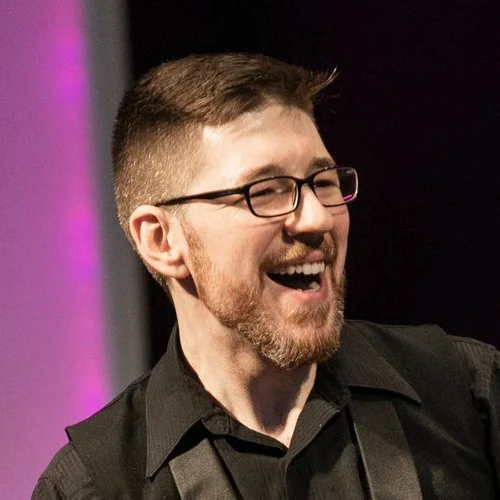
Topher Keene is a Grammy-Award Nominated Vocal Coach with decades of experience. He has helped thousands of singers, actors, and voice actors — from total beginners to working professionals — and trains the voice the way a good coach trains an athlete: from the ground up, one rep at a time.
Connect on LinkedIn: @VocalCoachTopher
Learn More & 1-on-1 Coaching: www.VocalCoachTopher.com
Want to work with me one-on-one?
Looking for more?