Commercials, Audiobooks, or Animation: Where Should New Voice Actors Start?
One of the most common questions I get from new voice actors goes something like this: “Where do people actually start? Commercials? Audiobooks? Animation and video games?”
What they're usually hoping for is a tidy roadmap. Step one, record thirty commercials. Step two, narrate a book. Step three, get cast in a cartoon. And I understand the appeal, because a roadmap feels safe. If there's a standard sequence, you can't be doing it wrong.
Here's the honest answer instead: there is no typical starting point. But there are real differences between these paths, some of them big, and understanding those differences is how you pick the right one for you. Let's walk through it.
It's Like Asking Where New Singers Start
So, imagine asking a vocal coach whether new singers “typically” start with pop, country, rock, musical theater, or opera.
The question doesn't really have an answer, because that's not how singers work. Some genres are harder to learn. Some are more in demand. Some pay better, some have friendlier communities, some require years of technique before you can participate at all. But at the end of the day, the biggest factor in where a singer starts is personal preference. People start with the music they love, because that's the music they'll actually practice.
Voice acting genres work exactly the same way. Commercials, audiobooks, animation, and video games each have their own skills, their own competitive landscape, and their own workload. None of them is the official on-ramp. What matters is understanding what each one asks of a beginner, and what each one gives back.
Commercials: Easiest to Learn, Hardest to Book
Commercials are probably the easiest place to learn the basics of the craft, and there's a simple reason: the scripts are short, the intent is clear, and the feedback loop is fast. A thirty-second spot teaches you script analysis, pacing, emphasis, and talking to one imaginary listener instead of announcing at a crowd. You can do twenty reps in an afternoon. As a pure training ground, commercial copy is hard to beat.
Here's the catch, and it's a big one: commercials are nearly always paid work. There is no real amateur tier. The low-stakes practice gigs basically don't exist, because even a small local spot has a budget behind it, and where there's a budget, there are professionals competing for it.
That means when you submit for commercial work as a beginner, you are not competing against other beginners. You're competing against people who have been doing this for ten, twenty, thirty years, who have thousands of commercials under their belts, who can deliver exactly what the client wants in two takes. That's the room you're walking into.
And commercial copy really does teach you things nothing else teaches as quickly. Every spot you read is doing one of two jobs: driving a specific action, or building a feeling about the brand. Learning to diagnose which job the script is doing, and shaping your read to serve it, is one of the fastest ways I know to turn a person who reads words out loud into an actor making choices.
Coaching note: This isn't a reason to avoid commercial copy. Practice it constantly, because the fundamentals it builds transfer everywhere. Just set your expectations about booking paid commercial work early on, so the silence doesn't discourage you. The silence is structural, not personal.
Animation and Video Games: Brutal at the Top, Wide Open at the Bottom
Animation sits at the other end of the spectrum, because it's really two different worlds wearing the same name.
At the professional level, animation is one of the most competitive corners of the entire industry. Major studio projects, streaming originals, big game titles: those rooms are small, the rosters are established, and thousands of trained actors are competing for every role. Nobody walks into that world in year one, and anyone who tells you otherwise is selling something.
But below the professional tier, animation and games have something commercials almost completely lack: a thriving amateur ecosystem. Fan dubs, independent animations, student films, visual novels, audio dramas, indie games. These projects cast constantly, most of them from open calls, and many are unpaid or modestly paid, which means the decades-deep professionals aren't competing for them. The room is full of people at your level.
That ecosystem is where beginners build real skills: taking direction, creating distinct characters, sustaining a voice across sessions, delivering lines that match animation timing. It's also where you collect your first credits and your first finished recordings, the raw material your eventual demo gets built from. If you want the deeper breakdown of how that works, I've written before about how self-made demos and indie credits fit into the early career.
One coaching note on game work specifically, because it's the corner of this world people underestimate: games ask more of your instrument than almost anything else. Combat efforts, screams, damage reactions, dozens of takes of each. Done wrong, a single session can leave you hoarse for days. If character and game work is your lane, vocal technique isn't optional polish. It's the protective equipment, and it's a huge part of what I train with my voice acting students.
Audiobooks: The Marathon Most Beginners Shouldn't Start With
Audiobooks are the path I generally don't recommend to beginners, unless audiobooks are the only thing you're interested in. And my reasons have nothing to do with the quality of the work, because audiobook narration is a beautiful craft. It's about workload.
A commercial takes a minute or two of finished audio. An animation role might be a handful of lines. An audiobook takes ten, twenty, or more hours of recording to complete, and that's just the finished runtime. Behind every finished hour sits more time in editing, retakes, and quality control. One book is a project measured in weeks.
Think about what that means for a beginner specifically. When you're new, your reps are how you improve, and improvement comes from starting over, trying a different read, finishing something, and moving to the next thing. Commercials and character work give you dozens of complete cycles in the time one audiobook gives you a single cycle. A commercial is a sprint. An audiobook is a marathon. And you don't learn to run by signing up for a marathon first.
There's a stamina issue too. Narration demands vocal consistency across hours and days: the same energy, the same character voices, the same room sound on Tuesday that you had on Saturday. Those are real skills, and they're advanced skills. Asking a brand-new voice actor to hold a performance together for fifteen hours of audio is asking them to play a full concert before they've learned their scales.
Now, if audiobooks are genuinely your dream, none of this should stop you. Start shorter: short stories, novellas, public domain volunteer recordings. Build the stamina in pieces instead of betting your enthusiasm on a two-hundred-page debut.
So Where Should You Actually Start?
Strip away the industry details and you're left with a few honest questions:
• What do you actually love listening to? Your ear leads your voice. If you've absorbed thousands of hours of cartoons, your instincts are already half-trained for character work. If you can quote commercial reads from memory, start there. You build a listening vocabulary before you build a speaking vocabulary, and you already know which one yours is.
• What will you happily practice every day? The best starting genre is the one you'll show up for. A technically optimal path you quit in month two loses to an imperfect path you stick with for years.
• What does your voice naturally offer? Some instruments sit naturally in warm, trustworthy narration territory. Some snap into characters. You won't fully know until you experiment, which is itself an argument for starting somewhere with cheap, low-stakes reps.
• How much can you realistically commit? If you've got twenty minutes a day, commercial copy and short character auditions fit your life. Long-form narration doesn't. Match the genre's workload to your actual schedule, not your fantasy schedule.
Notice that “which genre is most prestigious” isn't on the list. Prestige is a terrible compass for a beginner. Reps, enjoyment, and fit are the whole game in the early years.
You Can Always Change Lanes
Here's the part that should take the pressure off: your starting genre is a starting point, not a life sentence.
The core skills travel with you. Mic technique, script analysis, taking direction, self-directing when nobody's there to guide you, editing your own audio: every genre deposits into the same account. Plenty of working narrators started in character work. Plenty of commercial regulars came up through indie games. The skills compound no matter which door you entered through.
And in the modern industry, there's no standard degree program, no step-by-step map that everyone follows. Everyone more or less carves out their own path. That used to scare people, and I get it. But it's actually the good news. It means nobody is ahead of you on some official track, and it means the path can be built around your voice, your life, and your goals instead of someone else's template. Think in a three-year arc, not a three-week one, and the first stretch of that arc is exactly this: exploring, logging reps, and finding your lane.
Map Your Path Before You Pick Your Lane
So, no, there's no typical starting point for new voice actors. Commercials build fundamentals fast but put you up against veterans for every paid gig. Animation and games are ferociously competitive at the top but wide open for beginners at the indie level. Audiobooks reward patience and stamina that most beginners haven't built yet. All three are real paths, and people have launched careers from each of them.
The right question isn't “where does everyone start?” It's “where should I start, given my voice, my tastes, my schedule, and my goals?” That's a mapping conversation, and it's exactly what I do in a first lesson: we walk through the genres together, figure out what your instrument and your instincts are suited for, and build a starter path that fits your actual life. Then, as you grow, we adjust it, because you're allowed to.
If you want help drawing that map, book a session at www.VocalCoachTopher.com and we'll plan your path together.

About the Author
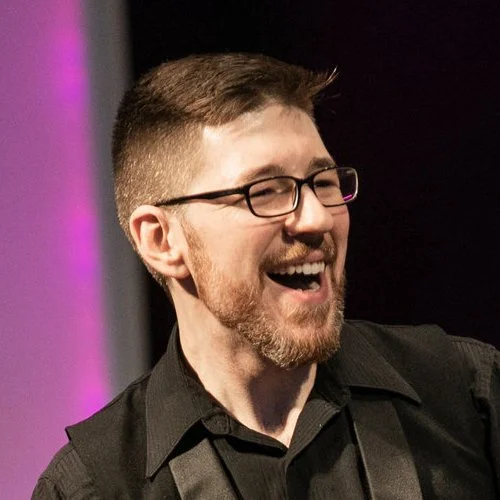
Topher Keene is a Grammy-Award Nominated Vocal Coach with decades of experience. He has helped thousands of singers, actors, and voice actors — from total beginners to working professionals — and trains the voice the way a good coach trains an athlete: from the ground up, one rep at a time.