Tap and Amplify: A Safer, Faster Alternative to Method Acting
You have heard the legends. The actor who lived on the streets for two weeks to play a homeless character. The one who refused to break a punishing accent for months, on set and off. The one who put their body and mind through genuine misery in the name of authenticity. These stories get told with a kind of reverence, as if suffering were the price of a real performance.
I want to offer you a different path, because there is one, and it is faster, safer, and more reliable. You do not have to manufacture a real emotion from scratch or relive a trauma to play it. You already carry every emotion you will ever need. The skill is learning to find it, tap it, and turn up the volume. That is the whole tool, and it does not require you to wreck yourself to use it.
Method acting can work, and I am not here to mock people who use it well. But its most extreme forms are risky, hard to repeat on cue, and tangled up with some genuinely unhealthy patterns in this industry. There is a better default for almost everyone.
Want to work with me one-on-one?
What method acting actually asks
Let me be fair to the thing I am offering an alternative to. Classic method acting, at its most committed, asks you to truly live the emotional reality of the character, to generate the actual feeling by actually putting yourself through some version of the experience.
The problems are practical before they are anything else. Reliving a real trauma to access a feeling is genuinely dangerous, it does not reliably switch on when the director calls action, and you cannot necessarily do it again for take eleven. It can blur the line between you and the character in ways that are hard to walk back. The legendary stories also tend to leave out the cost, the relationships strained and the wellbeing spent in pursuit of a feeling there was a gentler way to reach. You can respect the craft and still decide the price is usually too high.
Find, tap, amplify, pair
The alternative is a four-step move, and it is simple enough to teach a child, which I will get to.
• Find. Identify a real emotion you already carry. You are not inventing anything; you are locating something that is already in you.
• Tap. Touch the residue of that feeling. You do not relive the whole event in full force. You make contact with the trace it left behind, which is always still there.
• Amplify. Turn up the volume on that real spark until it fills the moment the scene needs. A small, true feeling, amplified, beats a large, manufactured one every time.
• Pair. Connect it to the character’s situation so the audience reads your genuine emotion as belonging to the story.
The crucial difference from method is right there in the word tap.Method acting recreates the fire. Tap and amplify uses the warmth that is still in the embers. You are not burning anything down to feel the heat. The emotion that comes out is completely real, because it is yours; you have simply scaled a true thing up rather than fabricating a false one.
Why a small true thing beats a big fake one
Audiences are unbelievably good at detecting fake emotion. They cannot always tell you what is wrong, but they feel it instantly, the way you can sense a forced laugh or a hollow apology. A single honest flicker of feeling, amplified, reads as true. A large, technically impressive, manufactured emotion reads as acting, and acting is exactly what you do not want them to see.
This is the quiet superpower of the tool. You are never performing an emotion from the outside. You are taking real material you already own and turning up its gain. That is why it survives contact with a long shoot or a stage run. The embers are always there to touch again, take after take, night after night, without costing you a piece of yourself each time.
For film, TV, and stage actors
Say the scene calls for the grief of losing someone. The method path says to relive your worst loss in full. The tap-and-amplify path says to find a real loss you carry, touch its residue lightly, amplify that, and pair it to the character’s circumstance.
The loss does not even have to match the scene in scale. A breakup, a pet that died, a friendship that faded, even, for a younger or less weathered actor, the genuine childhood grief of a lost favorite sweater or a broken toy. The size of the original event does not matter. The truth of the feeling does, and amplification handles the size. And here is something I tell students often: I do not need to know what you tapped. This is your private material. You can keep the source entirely to yourself and simply bring me the real, amplified feeling. The work stays honest without ever becoming an overshare.
For voice actors
In the booth, you have only your voice to carry the emotion, which makes a real internal spark even more important; a fake one is painfully obvious without a face and body to help sell it. Tap a true feeling, amplify it, and let it color the read, and the warmth in your voice will be genuine in a way pure technique cannot fake.
This also pairs directly with the emotional color wheel. Find your real feeling, then map it to a color and an intensity to give it shape and aim. Pull up a true thread of sadness, call it blue, decide whether it sits near the intense center or the subtle rim, and amplify to taste. The color tells you where to point the feeling; tap and amplify makes sure the feeling underneath is real.
For singers
A lyric means nothing until you mean it, and the difference between a singer who is hitting notes and one who is moving people is almost always whether real emotion sits under the sound. Find a memory the lyric touches, tap the feeling it left in you, amplify it, and pair it to the song. Suddenly you are not performing a sad song; you are singing something true, and the audience hears the difference immediately.
You do not need to fall apart on stage to do this, and you should not. You touch the ember, amplify it to the size the song needs, and let it ride underneath your technique. The breath support and the registers carry the sound. The tapped, amplified feeling carries the meaning.
For speakers
When you tell a real story from the stage, the temptation is either to perform the emotion or to armor up and flatten it out entirely. Neither lands. The honest move is to tap the genuine feeling the story still holds for you, amplify it just enough to be visible, and let the audience see something real.
You are not acting grief or joy. You located the true residue of it and turned it up a little so it reaches the back row. That restraint is the point. A speaker who quietly lets one real, amplified feeling show is far more compelling, and far more trustworthy, than one performing a whole emotional arc.
It is simple enough for a child
If you doubt how accessible this is, here is how I use it with young performers, and it works beautifully. A child playing a prince who has to gaze with love at a fellow seven-year-old will just freeze or giggle. So I do not ask for love in the abstract. I tell them to imagine the other actor is their kitten, and to picture gently scritching that little cat on the head. Real warmth floods their face instantly, because the feeling is true and already theirs. We found it, tapped it, amplified it, and paired it to the scene. No trauma, no Method, no two weeks on the streets. Just a real feeling, turned up.
If a child can find genuine love by thinking about their cat, you can find whatever your scene, song, or story needs. The material is already inside you.
Use the residue, not the wound
A responsible word, because this tool touches real feeling. The whole point of tapping rather than reliving is that you work with the residue an experience left behind, never the raw, open wound itself. If a memory is still genuinely destabilizing, that is not the one to reach for, and certainly not alone. There is no performance worth reopening real trauma to deliver.
The good news is you almost never need the biggest, rawest material. Smaller, settled feelings amplify just as well, often better, because you can actually control them. The faded ache of an old loss, the residual sting of an ordinary disappointment, the quiet tenderness behind a fond memory, these tap cleanly and scale up beautifully without putting you underwater. Amplification means you can start from something small and safe and still arrive somewhere powerful. That is the entire advantage over the method: you are choosing manageable, real material and turning up its volume, not surfacing your worst day on command. If heavier material is genuinely part of your work, that belongs in a room with the right support around you, not in a practice session by yourself.
Pick one tool and start this week
This is the last of the ten tools, so let me pull the thread all the way back. We started underneath everything, with the breath, and the paradox of engaging below while releasing above. We mapped your registers with the Core Four and learned that flexibility beats range. We stacked the body with posture, moved the sound around with placement, sharpened the words with diction, and built the endurance to last with the stamina ladder. Then we turned to performance: varying your pitch, pace, and projection, painting real emotion with the color wheel, and now tapping genuine feeling and amplifying it instead of faking or suffering for it. Every one of these is a muscle or a coordination, which means every one of them is trainable, starting from wherever you are today.
So do not try to do all ten at once. Pick the single tool that named a problem you recognized in yourself, and start it this week. Five honest minutes a day on that one thing will take you further than an overwhelming overhaul you abandon by Friday. The voice is built, not born, and it is built in small, consistent reps. Choose your first one, and start today.
ABOUT THE AUTHOR
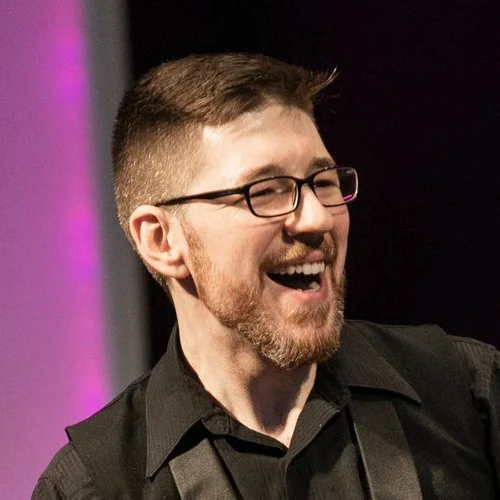
Topher Keene is widely regarded as one of America’s top voice and performance coaches. A Grammy-Award Finalist who has helped thousands of students, from seven-year-olds in the choir room to working professional actors and singers, he coaches singing, acting, voice acting, public speaking, and performance from his studio in Phoenix, Arizona and online worldwide.
Want to work with me one-on-one?
Looking for more?