How to Open a Speech: 10 Openers That Grab Any Room
So here is the thing nobody tells you about a speech: the room decides whether it is going to listen to you in about the time it takes to clear your throat. Not by the end of your first point. Not when you finally reach the good part on slide fourteen. In the first few seconds.
I coach executives, actors, and singers, and they all share the exact same opening ten seconds — heart going, palms damp, brain firing a thousand miles a minute. You have probably heard the old survey that more people fear public speaking than death; that at a funeral, plenty of folks would rather be in the casket than giving the eulogy. That is the feeling. And the cruel joke is that those first few seconds, the ones that scare us most, are exactly where most speakers throw away their best opportunity. They walk up and say, “Thank you all for being here. My name is…,” and the room quietly clocks out.
So let us not do that. Below are ten openers I teach — ten different doors into a room. Each one does a specific job. None of them is “better” than the others; they are tools, and the whole skill is matching the tool to the moment. I have stripped each one down to what it actually does and given you a handful of examples across very different kinds of talks, because the line that lands at a sales kickoff is not the line that lands at a memorial.
Want to work with me one-on-one?
1. The Campfire
So sometimes you do not want to shock a room. You want to gather it. The Campfire pulls everyone into a shared warmth before you ask anything of them. It speaks in we, not I, and it points forward.
• At a company all-hands: “Look around. A year ago, half of you had never met. This morning we shipped something none of us could have built alone — and we are barely getting started.”
• At a wedding: “Everyone in this room loves at least one of these two people. Tonight, we all get to be in a room full of that.”
• At a reunion: “Twenty years. Same friends. Better stories.”
Coaching note — Earn the “we.” If the room does not actually share the win, the Campfire curdles into flattery, and people can smell flattery in about a second.
2. The Trapdoor
So this one pulls the floor out. You take something the room is certain about and put a crack in it, and they lean forward to find out whether they have been wrong this whole time.
• Tech keynote: “Almost everything you believe about being productive is quietly costing you your best ideas.”
• Health talk: “The advice you have followed about sleep your entire life may be the reason you are exhausted.”
• Personal-finance seminar: “The ‘safe’ choice you made last year was the riskiest thing in your portfolio.”
Coaching note — You have to deliver on the crack. Pull the floor out and then say something obvious, and the room will not forgive you. The bolder the open, the bigger the payoff it has to earn.
3. The Open Loop
So the human brain cannot stand an unanswered question. It itches. The Open Loop poses a real one and then refuses to answer it right away, and the room sits there, mildly uncomfortable, waiting for you to close it.
• Business talk: “Why do nine out of ten new restaurants close within five years, when the food is usually just fine?”
• Classroom: “Why can you still sing every word of a song you hated in eighth grade, but not the thing you studied last night?”
• Nonprofit pitch: “Why does this city spend more to keep one person on the street for a year than it would cost to simply house them?”
Coaching note — Do not answer it in your next breath. Let it hang. Then build your whole talk toward the answer and pay it off at the end. An open loop you never close is just a tease.
4. The Hard Number
So a number nobody expects does something a paragraph cannot: it makes an abstract problem suddenly weigh something. The trick is that the figure has to feel personal, not like a footnote.
• Workplace talk: “The average employee spends nearly a full work-week every month in meetings that could have been a two-line message.”
• Environmental talk: “Every single minute, roughly a garbage truck’s worth of plastic enters the ocean.”
• Education panel: “A child who is not reading at grade level by age nine is far less likely to ever finish high school.”
Coaching note — One number. Not five. A wall of statistics is the fastest way to lose a room. Pick the single figure that lands and let it sit in the air — and verify it cold, because a number you cannot defend from the stage is worse than no number at all.
5. The One Person
So your audience cannot picture a million people. Nobody can. But they can picture one. This opener zooms all the way in on a single human being and lets the big idea ride in on that small, specific story.
• Nonprofit gala: “There is a kid — I will call him Marcus — who walks past three corner stores on the way to school, and not one of them sells a vegetable.”
• Sales presentation: “Last spring a customer called us at two in the morning. Not because something had broken — because, for the first time in years, something had finally just worked.”
• Medical conference: “I want to tell you about one patient, because the number I am about to give you is really just her, ten thousand times over.”
Coaching note — Make the person specific enough to feel real: a name, a time of day, one telling detail. But never put a real, identifiable person on display without their blessing. The specificity is what sells it; the discretion is what keeps it honest.
6. The Borrowed Voice
So sometimes the strongest thing you can do is open with someone else’s words. A good quotation lends you instant credibility and frames everything that follows — as long as it genuinely fits and you are not just decorating the top of your talk.
• Leadership keynote: open with a line from a writer or leader the room already respects, then turn it immediately toward your point.
• Commencement: borrow a line about beginnings, then make it about the specific people sitting in the gowns in front of you.
• Tribute or eulogy: use a line the person you are honoring actually loved, so the words belong to them as much as to whoever wrote them.
Coaching note — Two rules. Get the quote and the attribution exactly right — a misquote on stage is a slow-motion disaster. And do not let the quotation do the whole job. It opens the door; you still have to walk through it.
7. The Held Breath
So this is the one nobody believes will work until they try it. You walk up. You set down your notes. And you say nothing — for a real beat, two seconds, three, that feel like ten. The room goes quiet because you did. Then you speak.
It travels almost anywhere: a keynote, a toast, a tense team meeting, a eulogy where the silence is the entire point.
Coaching note — This takes nerve, which is exactly why it works — you are showing the room you are not afraid of the quiet. Rehearse it against a clock, out loud, because three seconds of stage silence feels like a minute and most people bail at one. It is pace doing its real job: the gap that makes the next word matter.
8. The Window
So instead of describing the problem, you hand the room a view of the world on the far side of it. This opener usually starts with “Imagine” or “Picture this,” and it drops people into a future they want, then quietly positions your talk as the path to get there.
• Mission-driven org: “Picture a city where no kid ages out of foster care into a parking lot.”
• Product launch: “Imagine never losing another afternoon to the exact problem this makes disappear.”
• Commencement: “Imagine the version of you who walks back through these doors in twenty years to give this speech.”
Coaching note — Keep the picture concrete and human-sized. “Imagine a better tomorrow” is wallpaper. “Imagine your Sunday nights without the dread” is a window.
9. The Scar
So people do not trust shiny. This opener does the opposite of the highlight reel — you lead with the low point, the failure, the version of you that was lost, and then you turn. Earned credibility beats borrowed credibility every time.
• Entrepreneur keynote: “Five years ago I was writing my company’s obituary in my head at three in the morning. Here is what I had wrong, and what finally worked.”
• Wellness or recovery talk: “I am going to start where I actually started, which is the bottom.”
• Teaching or coaching: “The first time I stepped on a stage, I forgot every word I had. So let us talk about what fear is actually trying to tell you.”
Coaching note — Show the scar, not the open wound. The room needs to feel that you have made it to the other side; otherwise you are asking them to take care of you instead of listen to you. As Brené Brown has spent a career arguing, vulnerability is strength only when it serves a purpose — and here, the purpose is them, not you.
10. The Anchor
So time is a powerful frame. The Anchor drops a pin in history — a date, an anniversary, an “on this day” — and uses it to make this present moment feel like part of a much bigger story the room is suddenly standing inside of.
• Industry conference: “Seventy years ago this month, a machine the size of a room did a single calculation. We are standing at the far end of that line.”
• Organizational milestone: “Ten years ago today, this was four people and a whiteboard.”
• Community event: “On this date, a generation ago, this neighborhood looked nothing like it does now. Let us talk about the next chapter.”
Coaching note — The date has to truly connect to your point, or it is just trivia. The power is not the pin in the past; it is the line you draw from then, to now, to next.
So pick one. Not all ten — one. The most common mistake I see is not choosing the wrong opener; it is trying to cram three of them into the first thirty seconds and burying the room before you have actually said anything. Choose the door that fits the room you are walking into, open it cleanly, and then get out of the doorway and into the talk. The opener has exactly one job: to buy you the next two minutes of genuine attention. Spend them well.
And here is the part people never expect — write your opener last. You cannot know how to begin a talk until you know where it is going. Build the speech, find the one thing you are really there to say, and then go back and build the door that leads straight to it.
About the Author
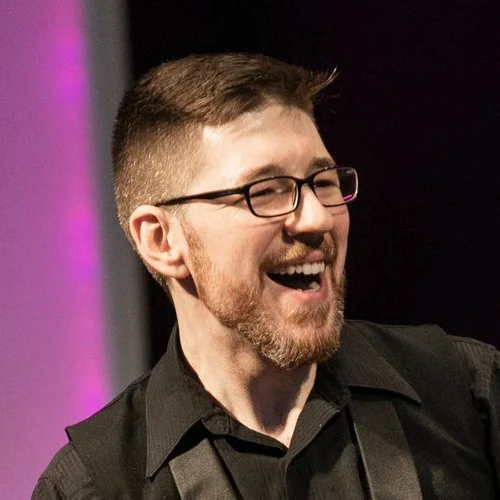
Topher Keene is a Grammy-Award Nominated Vocal Coach based in Phoenix, working with singers, actors, voice actors, and executives on the voice work that holds up under pressure — onstage, on camera, and at the podium. Connect on LinkedIn at@VocalCoachTopher.
Want to work with me one-on-one?
Looking for more?