Why Your Acting Feels Flat (And How to Add Emotional Color to Every Scene)
You've probably had this experience: you read a scene out loud, you hit all the words, you don't fumble a single line, and then you watch the playback and think... that was so boring.
You weren't bad. You were technically fine. But there was nothing happening underneath the words. No texture. No life. Just a person reading a script accurately.
This is the single most common plateau actors hit, especially in early training. The good news is it's not a talent problem. It's a toolkit problem. You haven't been given the specific techniques for adding emotional dimension to a performance. So today, I want to walk you through the frameworks I use with students who are stuck in monotone delivery and want to break out of it.
Want to work with me One-On-One?
Acting Is a Roller Coaster, Not a Water Slide
Before we get into emotional technique, let me give you the mental model that changes everything about how you approach a scene.
A lot of actors treat performance like a water slide. You climb up, you sit down, and if anything gets uncomfortable, you can stand up and step off. Forgot a line? Stop and start over. Felt awkward? Pause and reset. Tried an emotion that didn't land? Apologize and try again.
Real acting works like a roller coaster. Once you pull the safety bar down and the car starts moving, you're committed. Whatever happens, happens. You react to it, you ride it out, you arrive at the end. You don't get to step off in the middle just because something didn't go how you planned.
This is what coaches mean when they say "stay in character." It's not just about not breaking the fourth wall. It's about the discipline of letting a scene unfold even when it's uncomfortable, even when you flubbed something, even when an emotion surprises you. You stay in it.
Practice this immediately: next time you run a scene, don't stop. No matter what. Trip over a word? Keep going. Feel a wave of self-consciousness? Keep going. Make it to the end of the scene every single time, even if the take is terrible. The willingness to ride it out is a fundamental acting skill, and it's trained through repetition.
The Color Wheel: A Framework for Emotional Range
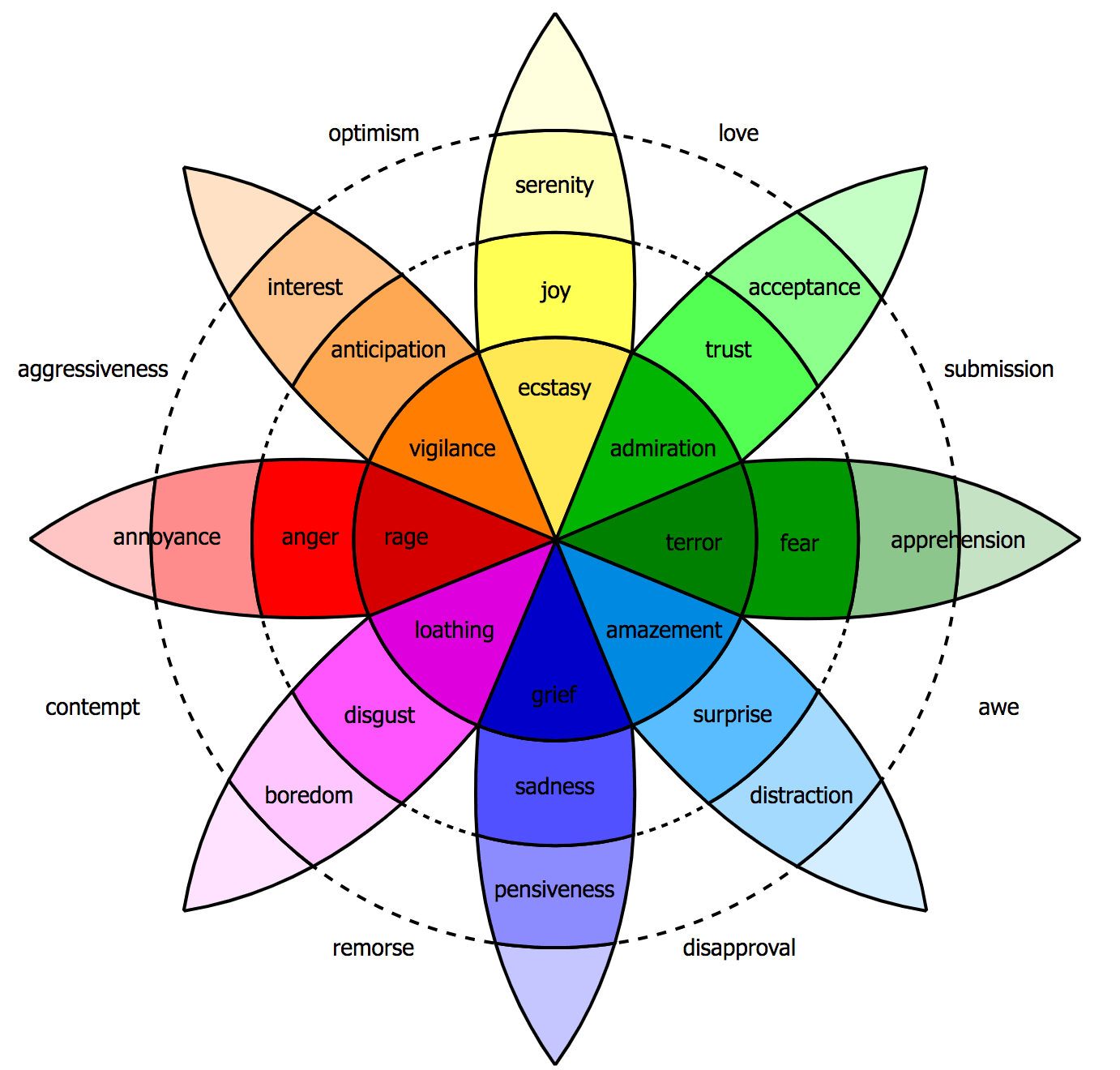
Here's the technique I want you to take from this post and start using today.
Imagine a rainbow color wheel. Every color represents a different emotion. Red might be anger. Yellow might be joy. Blue is sadness. Green is jealousy. Purple is grief. Orange is excitement. You get the idea.
Now look at the last scene you performed. How many colors were in it?
If you're like most beginning actors, the honest answer is one. Maybe two. You picked the obvious dominant emotion (sadness in a sad scene, anger in an angry scene) and stayed there for the entire performance. That's why it felt flat. Real human emotion doesn't sit in one color. It moves.
Think about the last time you had a genuinely difficult conversation with someone you love. You weren't just angry. You were angry, then briefly amused at something they said, then frustrated that you couldn't articulate yourself, then sad, then defensive, then for one weird second you noticed you were hungry, then back to sad, then resolute. A whole spectrum in five minutes.
That's what audiences are watching for, even if they can't name it. They're watching for the transitions between emotions. The moment you shift from frustration to grief to a flicker of dark humor. That's where real performances live.
How to Apply the Color Wheel to a Scene
Take your script. Read it through once just to know what's happening. Then go back and ask yourself, line by line:
What's the dominant color of this moment?
What's a secondary color underneath it?
Is there a moment somewhere in this scene where the color flips entirely?
A grieving wife confronting her husband isn't just sad. There's anger. There's longing. There's maybe even a moment of dark relief that they're finally talking about it. Find those secondary colors and put them somewhere specific in the scene.
If your scene is currently all blue, your homework is to find where the red lives. Where the yellow lives. Where the unexpected color shows up for one beat and then disappears. That's the work.
Pauses Are Where the Acting Happens
Beginners are terrified of silence. They feel like every second they're not talking is a second they're failing. So they rush. They blow through emotional moments because the silence feels like dead air.
Here's the truth: the audience doesn't watch you say the line. They watch you think about saying the line.
Look at any great film performance. Pause it during a heavy moment. The actor isn't talking. They're not even moving much. But you can see thought happening behind their eyes. You're watching them decide whether to say what they're about to say. That's the performance.
When you're working on a scene with weight to it, especially a confession or a hard truth, build a pause in before the loaded line, not after. The character in the scene doesn't have a script. They're figuring out, in real time, whether they can bear to say what they're about to say. Give yourself the space to do that work in front of the audience.
Try this exercise. Take any scene with a difficult line. Read it once at your normal pace. Then read it again, but before the most loaded line in the scene, count silently to three. Just hold the moment. Let yourself actually think about what you're about to say. The performance will transform.
Don't Try to Cry. Try to Hold It Back.
This one feels counterintuitive but it's one of the most important techniques in screen acting.
When you have an emotional scene, the instinct is to try to summon the emotion. Squeeze your eyes. Force the tears. Make your voice shake. Push the feelings out where the camera can see them.
This almost always reads as fake. Audiences can smell forced emotion from across the theater.
The technique that works is the opposite: show the effort to hold it back.
Real grief, real anger, real heartbreak, none of these come out cleanly. People in genuine pain are usually trying not to fall apart. They're swallowing it. They're forcing themselves to keep speaking through a closing throat. They're blinking hard. They're looking away because if they keep looking at you they'll lose it. They make a small noise they didn't mean to make.
When you play the resistance to the emotion instead of the emotion itself, you let the audience do the work of recognizing what's underneath. And what they imagine is always more powerful than anything you could perform.
Use Your Own Life as Fuel
Where does the emotion actually come from? You can't manufacture grief about a fictional character's fictional loss out of thin air. So you borrow.
Every actor has lived through hard things. A breakup. A death in the family. The loss of a pet. A friendship that ended badly. A moment of real fear or shame or longing. These are your raw materials.
When you're playing a scene that requires a specific emotion, you don't have to invent it. You connect the character's situation to a personal memory that produces the same feeling in you, and you let that real feeling color the performance.
This isn't about replacing the character with yourself. The character still says the character's lines and lives in the character's circumstances. But the emotional engine running underneath the performance is real, because you're tapping into something real that you've actually felt.
A few notes on doing this responsibly:
You don't need fresh trauma. Use processed emotions, not raw wounds. If a memory still destabilizes you, it's probably too soon to use it as a tool.
You don't have to use the saddest thing you've ever experienced for every scene. Match the intensity. A scene of mild disappointment doesn't need your worst day. A scene of devastating loss might.
Have a way to come down. Make a habit of doing something physical and grounding after an emotionally heavy scene. Shake out your hands. Go for a walk. Have a glass of water. Don't carry the borrowed emotion home with you.
Find Material That Fits Who You Naturally Are
One last piece of advice that took me a long time to internalize as a coach.
A lot of actors try to force themselves into character types that don't match their natural personality. The naturally blunt person tries to play gentle ingenues. The naturally warm person tries to play steely cynics. And while range is a worthwhile goal long-term, when you're building your skills, you'll grow faster by working in material that's closer to who you already are.
If you're naturally sarcastic and dry, lean into characters with bite. Work on scenes where the emotional palette includes irritation, dark humor, frustration, and bluntness. You'll find emotional range in those colors much faster than if you're trying to manufacture sweetness from scratch.
This doesn't mean you'll only ever play yourself. It means you start where the alignment is strongest and expand from there. Once you've built confidence with characters who feel close to your natural voice, stretching into very different types becomes much easier.
Putting It All Together
Here's your homework if you want to take the leap from "technically fine reading" to "actually compelling performance":
Pick a scene you've worked on before. Don't grab something new. Use something you already know.
Color-code it. Mark up the script with the dominant and secondary emotions for each section. Make sure you have at least three colors in the scene.
Find one place to add a pause before a loaded line. Hold it longer than feels comfortable.
Connect at least one moment to a real memory that produces the right emotion in you.
For any tearful or devastated moment, play the resistance to the emotion instead of the emotion itself.
Run the scene without stopping. Roller coaster, not water slide. No matter what happens, ride it to the end.
Record it. Watch it back the next day with fresh eyes.
You'll feel the difference immediately. And so will anyone watching.
Acting isn't about producing emotion on cue like a vending machine. It's about being a human being in front of other human beings, doing the most honest version of what's on the page. The techniques in this post are scaffolding for that honesty. Use them, and then forget them, and then use them again. That's the practice.
Looking for more?