Practice vs Training: The Strength-Coach Approach to Building Your Voice
Most singers think they need more practice. What they actually need is more training. The distinction sounds like semantic hair-splitting until you understand what each word actually points at, and then it becomes one of the most useful framings in all of vocal pedagogy. Practice is what you do with an instrument you already have. Training is what builds the instrument itself. The two work together, but they are not the same thing, and confusing them costs most singers years of development they didn't have to lose.
Two decades of coaching has taught me that the singers who progress fastest are the ones who understand the difference. Practice is refining technique on an existing capacity. Training is expanding the capacity itself. This post is the framework — borrowed from strength coaching, which has thought about this distinction more clearly than vocal pedagogy traditionally has.
Here's the working model.
The instrument you can't buy
Most instruments can be upgraded by buying a better one. If you're learning piano on a fifty-dollar keyboard from Amazon and you want to play Chopin, the problem is not your practice — the problem is the instrument. The fifty-dollar keyboard cannot produce Chopin's tonal range. You need a better instrument. Spend ten thousand dollars on a grand piano, and the same practice now produces dramatically better music.
You can't do this with the voice. The voice is the only instrument you cannot purchase as an upgrade. The voice you have is the voice you have to work with.
But unlike other instruments, the voice is a biological instrument that can be physically developed. You can't buy a better voice, but you can build a better voice over time through deliberate developmental work. The voice grows in response to the work you do with it. This is the entire premise of voice training as distinct from voice practice.
Imagine starting with a five-note electronic keyboard. You couldn't buy a better one. But if you practiced it daily and worked with it deliberately, the instrument itself grew — new notes appeared, pedals appeared, the sound quality improved. Eventually, after years of consistent work, the five-note keyboard had evolved into a full concert grand. That's a useful metaphor for what training does to the voice.
Practice versus training versus coaching
The three terms point at three different activities, and most vocal pedagogy conflates them.
Practice is refining your existing technique. Working on the song you're going to perform next month. Polishing the audition cut. Drilling the difficult passage. Practice assumes the instrument is roughly fixed and works on what you can do with it.
Coaching is targeted refinement on specific material. A vocal coach takes a single song or role and helps you make it more beautiful. Interpretation, phrasing, breath placement, stylistic choices. Coaching is practice with external feedback on specific repertoire.
Training is expanding the underlying capacity. Growing the instrument itself — range, stamina, vocal freedom, registration access. Training treats the voice as a physical instrument that can be built, the way a strength coach builds a body.
All three activities are useful. Most singers need all three at different stages of their career. But they are different activities, and the singer who only practices their existing repertoire across years will plateau at the level their existing instrument can produce. To exceed that level, training is required.
The strength coach analogy
Strength coaches have thought clearly about this distinction for a long time, and the parallel to voice work is exact.
A bodybuilder doesn't get bigger by lifting the same weights every week. The body adapts to the work given. To grow, the work has to grow. Progressive overload — gradually increasing the demand on the muscles — is the working principle behind every effective strength program.
The voice works the same way. Singing the same songs at the same difficulty across years produces a voice that's good at those songs. To grow the voice itself, the work has to grow. New range. New stamina. New muscular patterns. Progressive overload applied to the voice.
Most singers practice but don't train. They sing songs they can already sing. They work on technique within their existing range. They are running a maintenance program, and they wonder why their voice isn't growing.
Why training matters more than technique for most singers
Most singers who come to me with technical problems don't actually have technical problems. They have capacity problems. They've reached the edge of their current instrument and they're trying to use technique to push past it. No amount of technique will make a 5-note keyboard play Chopin. No amount of technique will make a singer with limited range sing a song that's outside that range.
The fix is to expand the capacity. Build the range. Build the stamina. Build the registration access. Then the technique that previously couldn't deliver the song now can, because the instrument it's working on has grown.
Some singers have leftover capacity they're not using. For them, technique work alone produces dramatic results — they've been operating at 60% of their actual capability, and technique unlocks the rest. But many singers have already maximized their current instrument and need to expand the instrument itself.
A diagnostic question: when you sing at the edge of your current capability, does it feel like a coordination problem (you know what to do, you just can't quite execute it) or a capacity problem (your body literally can't produce the sound you're asking for)? The first calls for practice; the second calls for training.
The frequency-over-intensity principle
Both practice and training respond better to frequency than to intensity for the voice. Five minutes a day of focused work produces more growth than an hour once a week.
This is partly because the voice is built on small muscles that respond to frequent stimulation. Cricothyroid, thyroarytenoid, the intercostals, the diaphragm. Small muscles. Frequent training. The body adapts to consistent demand more readily than to occasional intense demand.
The implication: structure your training as daily small bouts, not weekly long sessions. Most singers who try to train make the mistake of pursuing intensity — long sessions of demanding work that leave the voice tired. Tired voices don't adapt well. Fresh voices working short focused bouts adapt rapidly.
Daily five-minute training sessions across a year produce dramatic capacity expansion. Weekly hour-long sessions produce far less, partly because the work is too far apart and partly because the volume per session usually produces fatigue rather than adaptation.
The discipline distinction
The hard part of strength training is not designing the program. It's doing the program for ten years. Most people who fail at strength training don't fail because the program was wrong. They fail because they couldn't sustain it.
The hard part of voice training is the same. The program is simple. Daily small bouts of focused work on fundamentals. Doing this for years is the difficult part.
Most singers get caught up in optimizing the program when the actual obstacle is execution. They research perfect routines. They study advanced methodologies. They take workshops on cutting-edge techniques. And they don't actually do the work consistently, day after day, year after year. The research is a substitute for the practice.
The strength training world has a phrase for this:the best program is the one you'll actually do. The same principle applies to voice training. A simple routine done daily beats a complex routine done occasionally.
The objective vs subjective question
One of the most useful things about strength training is that it's brutally objective. You can lift the weight or you can't. The bar moves or it doesn't. There's no room for subjective interpretation.
Singing tends to operate in subjective floating language."My voice felt good today.""That sounded better.""I think my breath was more engaged." These statements are not objective signals. They are subjective impressions, often colored by mood, time of day, audience, and dozens of other variables.
Make your voice training as objective as possible. Record yourself weekly. Track your accessible range. Note specific exercises and how they're progressing. The data is more useful than the impressions.
This is the discipline I learned from weightlifting that transferred most directly into vocal pedagogy. Subjective feelings are unreliable. Objective measurements are reliable. Build the objective measurements into your training to know whether the work is actually producing results.
Capacity expansion: what it looks like
Expanding the capacity of your voice happens through deliberate developmental work, not through technique drills alone.
Range expansion: walk the head voice down. Daily descending head voice scales from the top of your range. Refuse to flip into chest. Over weeks, the head voice reaches further into your speaking range. The mix area becomes accessible. The bridge becomes navigable.
Stamina expansion: build phrase length. Practice sustained phrases across longer breath spans. Start with whatever you can comfortably sustain. Add a half-second per week. Six months of this builds dramatically longer phrase capacity.
Vocal freedom expansion: daily SOVT work. Lip bubbles, hisses, straw phonation across your range, every day. The cumulative release across months produces measurable change in throat tension.
These are training exercises, not practice exercises. They are designed to expand the underlying capacity, not to refine existing performance on specific material.
When to practice and when to train
Most singers benefit from doing both in parallel. A typical weekly structure: thirty minutes of training daily (capacity expansion exercises) plus session-specific practice when needed for upcoming performances.
Heavy practice phases happen around specific upcoming events. An audition next month. A performance next week. A recording session. During these phases, practice dominates — you're refining specific material for a specific delivery.
Heavy training phases happen between projects. When you have time and no immediate performance demands, train. Expand capacity. Build the underlying instrument. The training phases are what makes the practice phases produce better results when they come.
Most working singers reverse this and only practice for upcoming events. They never train. Their voice grows only as a side effect of working on specific material. The capacity stays roughly fixed across decades, and the singer plateaus at the level their existing instrument allows.
When to bring in a coach
Training is harder to do alone than practice. Practice has built-in feedback — you know whether the song sounded right. Training works on capacities that take weeks to show change, and unguided training can drift into ineffective patterns without external correction.
Find a coach who explicitly teaches voice as a trainable instrument. Avoid coaches who treat voice as something you have rather than something you build. The pros who become voice builders worth working with are the ones who treat developmental work as the core of their pedagogy.
Pick one capacity to expand. Build a five-minute daily training routine for it. Do it every day for ninety days. Watch what your voice does at week thirteen. Most singers have been practicing without training for years. Switch the ratio. Train more. Build the instrument. The capacity is buildable. Start tonight.
Want to work with me one-on-one?
Looking for more?
Vocal Exercise YouTube Playlist
Beginner-Friendly Songs for Men YouTube Playlist
Beginner-Friendly Songs for Women YouTube Playlist
ABOUT THE AUTHOR
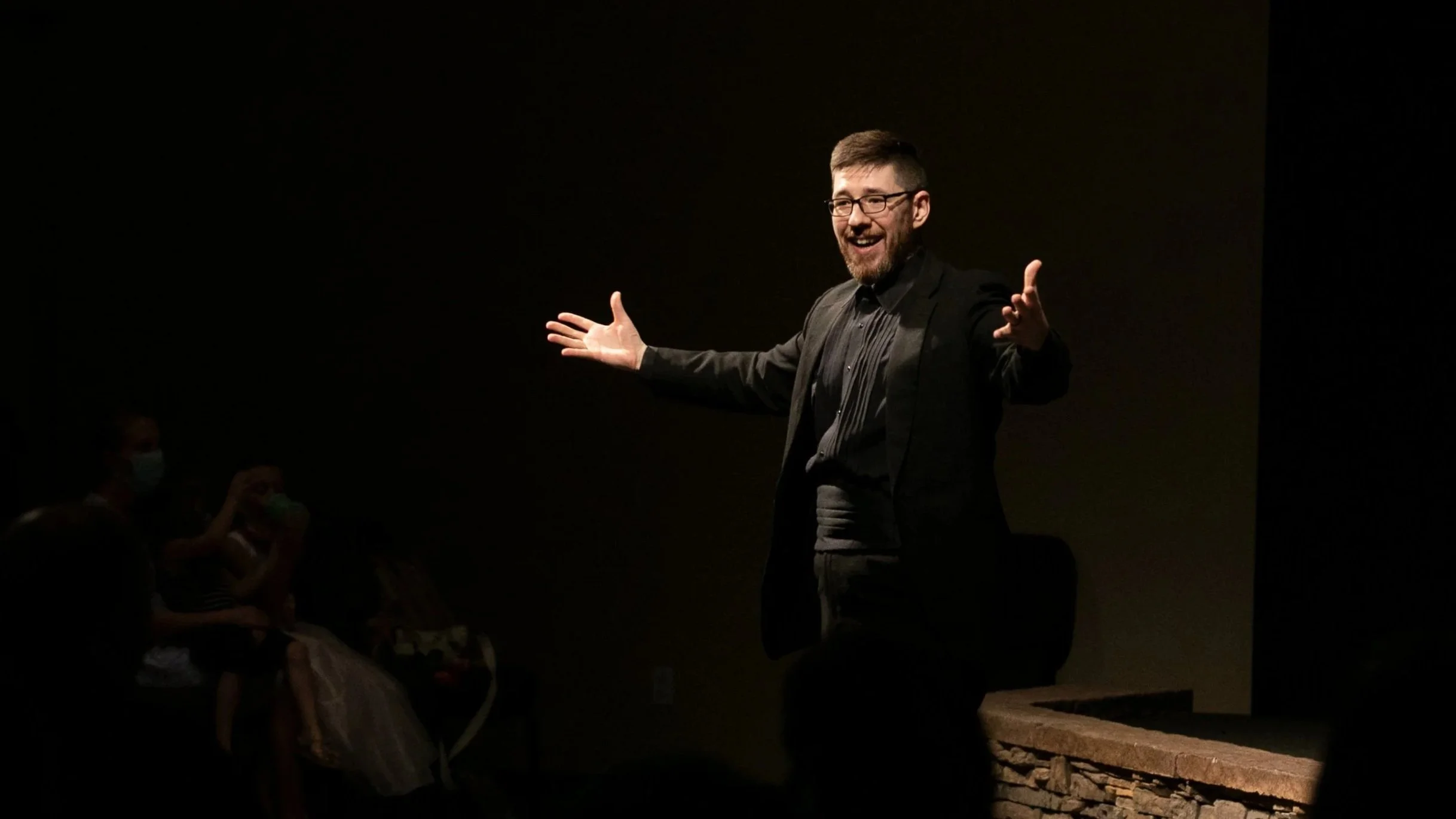
Topher Keene
Vocal Coach · Voice Teacher · Performance Pedagogue
Grammy-Award Finalist Topher Keene is widely regarded as one of America's top vocal coaches, with a particular orientation toward voice building — the developmental work that grows the underlying instrument rather than just refining its existing technique. With over two decades of teaching, performing, and coaching experience, he works with every category of professional voice user, from absolute beginners through working Broadway, television, and recording professionals, and is known for a pedagogy built on three pillars that hold up every voice: breath support, vocal freedom, and registration.
Topher's foundational pedagogy treats the voice as a physical instrument that responds to deliberate developmental work, the way a body responds to strength training. Most vocal problems, he argues, are one of three things — breath, freedom, or registration — and the work of voice instruction is to identify which pillar is weakest and prescribe the daily exercises that strengthen it. The single biggest predictor of student progress is not weekly lesson length but daily practice consistency, and a sixty-second routine done every day produces dramatically more voice than a thirty-minute session done once a week. The simple exercises, done with discipline across years, are the actual work.
He has presented at national music education and acting conferences, led masterclasses at conservatories, theater programs, and professional development workshops across North America, and trains other vocal coaches in the diagnostic and developmental methods he uses with his own students. His belief that singing and effective voice use are buildable crafts — not mysterious gifts — drives a teaching practice that has helped thousands of voices develop capacities their owners didn't know were available to them.
"Most vocal problems are one of three things. Breath. Freedom. Registration. Fix the three pillars and almost everything else gets dramatically easier."