
Grammy-Award Finalist Topher Keene is widely regarded as one of America’s top Acting, Singing, and Public Speaking Coaches.
From teaching kids to sing their first solo, to helping Film and Television Stars perfect their roles, to helping pro Vocalists record hit albums, to helping YouTubers and Podcasters refine their vocal skills, to helping CEOs and Executives improve communication and presentation skills, Topher Keene can help anyone develop a powerful and confident voice and improve their performance skills.

Managing Multiple Auditions: The Working Performer's Guide to Scheduling, Strategy, and Professional Conduct
At some point in your performing career, something strange and wonderful happens: you start getting cast enough that scheduling becomes a problem. You have a callback for one show on the same night as an audition for another. You're already in rehearsals for one production when a more exciting opportunity appears. You're being asked to commit to something before you know whether you booked the thing you really want.
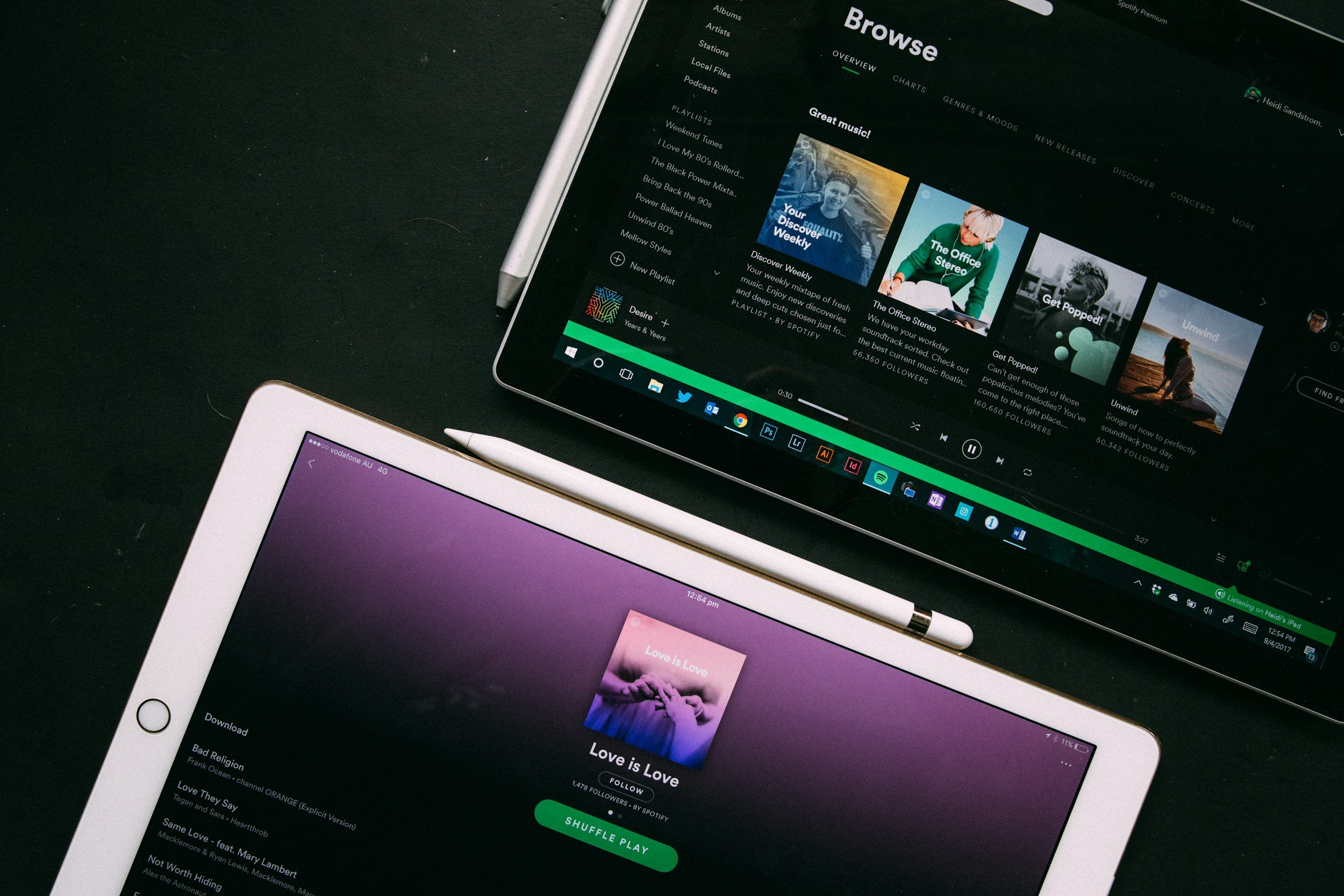
Your First Track Has 47 Streams. Here's Why That's Actually Kind of Incredible.
You put out your first song. You told your friends. You refreshed Spotify for Artists seventeen times in the first week. And now it's sitting at 47 streams and you're wondering if you wasted your time.
You didn't. Let me show you why.

Stop Overthinking Your Singing: Why Performance Experience Beats Practice-Room Perfection
There's a particular kind of singer I see all the time in my studio. They're technically advanced. They know their breath support. They can nail scales, hit notes cleanly, and analyze their own voice in granular detail. Ask them to break down what's happening in a specific passage and they can give you a dissertation on vowel placement, vocal onset, and resonance balance.
Then you ask them to sing a whole song with emotional conviction, and the performance falls flat.
This isn't a talent problem. It's a wiring problem. They've trained themselves to live at the micro level, note by note, and they've lost the ability to zoom out and just sing. The technical focus that helped them build their instrument is now the thing preventing them from using it expressively.
If any of this sounds familiar, this post is for you. Today I want to walk through the macro versus micro problem, why live performance experience is the cure, and some practical ways to force yourself out of the practice-room comfort zone and into the kind of exposure that actually grows performers.

Finding Your Authentic Singing Voice: Why Imitation Is Holding You Back
There's a moment in every developing singer's journey where they have to make a choice. They've been learning by imitating the artists they love, studying how their favorite vocalists sound, trying to replicate those tones and phrasings and textures. And at some point, they have to decide: am I going to keep being a really good copy, or am I going to become myself?
Most singers get stuck in the copying phase for years. Some never leave it. They develop impressive technical range, they can nail every run and ornament from the original recording, and yet when you hear them sing, you don't hear them. You hear a high-quality impression of someone else.
Ear Training for Singers: How to Actually Develop Your Musical Ear (Without Perfect Pitch)
Let's bust a myth right at the start: you don't need perfect pitch to be a great musician.
This belief sabotages more developing musicians than almost any other. People decide early on that because they can't name a note when it's played in isolation, they're somehow musically deficient. They feel locked out of higher-level musicianship. They watch the rare friend who can identify any note on hearing it and assume that ability is a prerequisite for serious musical work.
It's not. Most working professional musicians do not have perfect pitch. They have something different and arguably more useful: well-developed relative pitch, kinesthetic pitch awareness, and trained interval recognition. These are skills you can absolutely develop at any age, with the right approach and consistent practice.

Beyond Sassy and Sweet: Building a Voice Acting Repertoire That Actually Books Work
Most young voice actors start with the same handful of character types. The sassy teenager. The wide-eyed kid. The dorky best friend. The cheerful protagonist. These are the voices that come naturally, that match the actor's own age and demographic, and that show up most obviously in the animated content they grew up watching.
If you stay there, your career stalls. Casting calls come in for characters that don't fit your starter set, and you have nothing to offer. You watch other actors with broader ranges book the work that should have been yours.
The Voice Acting Self-Made Demo Recording Session: A Complete Workflow Guide
You've prepared the material. You've drilled your characters. You've made smart choices about what's going on the demo. Now comes the day of the actual recording session, and a lot of voice actors discover they didn't fully think through the workflow of capturing 30 or 40 takes efficiently in a single session.
Today I want to walk through the practical workflow of a demo recording session: how to manage takes, how to capture the variety you need, how to handle scream and shout lines without damaging your gear, and the specific techniques that come up when recording commercial work alongside character work.

Singing Through Illness: How to Practice When Your Voice Isn't at Its Best
Every singer eventually faces the same dilemma: you're sick, your voice isn't where it normally is, and you have to decide what to do with your practice routine. Skip practice entirely until you're better? Push through and risk making things worse? Find some middle path?
The standard advice is "rest your voice when you're sick." That's not wrong, exactly, but it's incomplete. The full picture is more nuanced, and the singers who handle illness intelligently come back from it stronger rather than further behind.

The Working Actor's Guide to Agent Representation: From First Headshots to Long-Term Career Strategy
You've been booking work. Maybe student films, maybe small indie projects, maybe a notable production that put you on someone's radar. And now an industry contact says the magic words: "I'd like to introduce you to my agent."
This is the moment a lot of actors discover they're not actually ready. Their materials are amateur. Their online presence is patchy. Their sense of what agents want, how the relationship works, and what they're supposed to bring to the meeting is hazy at best.
The Voice Is the Most Underused Tool in Executive Leadership
The voice is the leverage point hiding in plain sight. Of all the components of executive presence, voice is the one that's most directly trainable, produces the fastest measurable change, and is most consistently under-invested in. The people who do invest in it tend to look — to their peers — like they suddenly developed a quality they always had. They didn't develop a new quality. They removed the obstacle that was blocking the one they already had.
Advanced Vocal Technique for Film and Television Actors
Film and television acting has the most counterintuitive vocal technical demands in the performing arts. The camera is intimate, the microphone is close, and the actor is asked to sound like a real person having a real conversation — while delivering scripted material, on cue, after eight setup hours. The technical work is not to project. It is the opposite. It is to scale down the trained instrument to conversational volume without losing the underlying support, freedom, and clarity that make the voice expressive at any scale.

Working In an New Original Play/Musical: What Performers Need to Know About New Productions
There's a particular kind of theater experience that's nothing like working on an established show. You're cast in a brand new original production. The script is being revised during rehearsals. The songs might change. The running order shifts. The director is figuring out the show in real time, often alongside the performers.
Some of the most exciting performance experiences happen in original productions. So do some of the most chaotic ones. And the skills required to thrive in that environment are different from the skills that serve you in established repertoire.

Self-Tape Audition Mastery: How to Submit Video Auditions That Actually Book Roles
The video audition has become the standard entry point for most theater, film, and TV opportunities. The era of in-person initial auditions is largely over for many companies. What's replaced it is a workflow where you submit a video, casting reviews dozens or hundreds of submissions, and only a small percentage of submitters move forward to in-person callbacks.
This shift has changed the game in ways most performers haven't fully adapted to. The video audition has its own rules, its own pitfalls, and its own opportunities. The performers who understand the medium specifically have a significant advantage over those who treat it like a less-immediate version of an in-person audition.

How to Start a Speech: The First 30 Seconds That Decide Whether Your Audience Listens
This is the single most underappreciated principle in public speaking. Most speakers spend 95 percent of their preparation time on the body of their talk and almost no time on the opening. Then they wonder why their audiences seem disengaged, distracted, or unimpressed by what is actually solid content. The content isn't the problem. The opening lost the room, and the content never had a real chance.

Singing With Spasmodic Dysphonia: Practical Strategies for Vocal Resilience
This is a population that's often underserved in traditional vocal training. The standard advice (project more, breathe deeper, support harder) doesn't always apply. Sometimes it makes things worse. Singers and speakers with these conditions need a different approach: one that builds resilience around the unpredictability, develops tools for working with the condition rather than against it, and finds the path to performance that is genuinely possible rather than performing as if the condition doesn't exist.
Today I want to share what I've learned working with students who navigate vocal conditions, and I want to do it in a way that's useful both to those students and to anyone whose voice has ever felt out of their control. Many of these principles apply more broadly than to just specific medical diagnoses.

Finding Your Vocal Twin: Why Copying the Wrong Singers Is Sabotaging Your Practice
Your favorite singers are often the ones with the most impressive voices, the most distinctive styles, the most virtuosic technique. They're the singers everyone loves, which is partly why you love them too. But they're rarely the singers whose voices match your specific instrument.
This creates a problem that quietly limits a lot of vocal development: you spend your practice time studying and imitating singers whose voices don't tell you anything useful about your own.
The Open Casting Call: How Big Audition Opportunities Actually Work (And Why You Should Submit Anyway)
Every once in a while, an audition opportunity comes across your radar that feels almost mythical. A major studio is opening submissions to anyone who wants to apply. Disney is taking voice actor submissions. A network is doing open casting for a new show. The kind of opportunity that, in a previous era, would have required an agent, an industry connection, or a lucky break to even know about.
Why Having a "Non-Traditional" Voice Is a Voice Acting Advantage (Not a Limitation)
There's a belief that quietly sabotages a lot of aspiring voice actors before they ever really get started: the idea that their voice has to fit into a narrow, conventional category to be castable. That they need to sound like the standard masculine leading man, or the standard feminine romantic lead, or the standard whatever-their-age-and-demographic-suggests. And if their natural voice doesn't land squarely in one of those boxes, they're at a disadvantage.