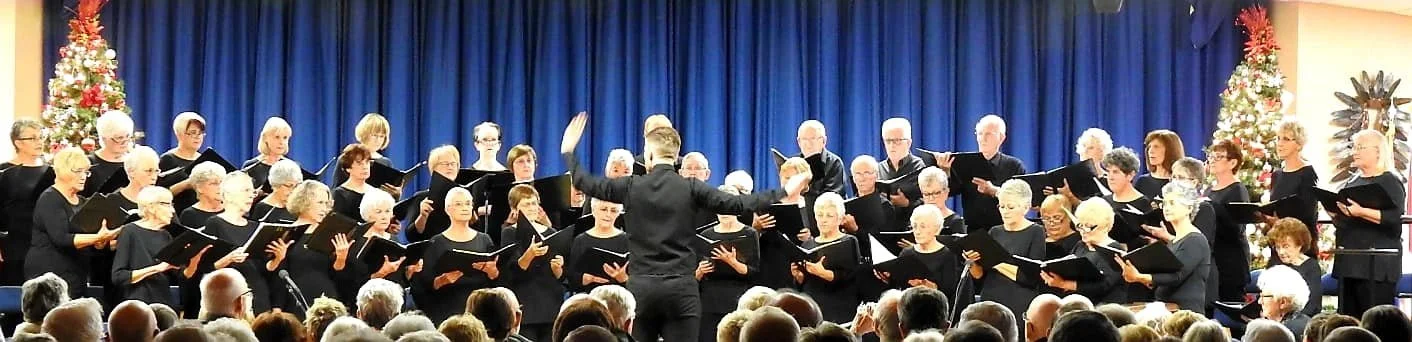
Grammy-Award Finalist Topher Keene is widely regarded as one of America’s top Acting, Singing, and Public Speaking Coaches.
From teaching kids to sing their first solo, to helping Film and Television Stars perfect their roles, to helping pro Vocalists record hit albums, to helping YouTubers and Podcasters refine their vocal skills, to helping CEOs and Executives improve communication and presentation skills, Topher Keene can help anyone develop a powerful and confident voice and improve their performance skills.
The Pause That Persuades: Strategic Silence in Executive Communication
Most executives are afraid of silence. They've been trained, by years of casual conversation, by years of nervous speaking, by years of feeling like they need to fill every second of airtime to retain the room, that silence is an enemy. Silence is not the enemy. Silence is the most powerful single tool in spoken communication. Leaders who can wield it strategically command attention in a way that fast-talking, filler-laden, never-pausing communicators simply cannot.
Q&A: How to Handle Audience Questions With Grace
Q&A is the part of public speaking where careers are made and broken in real time. The talk you just delivered was rehearsed. The Q&A is improvised. The audience is now testing whether you actually know what you were talking about, whether your composure holds when you don't control the script, and whether the person standing at the podium is the same person who delivered the polished message thirty seconds ago.

What Does a Flawless Performance Lack?
I want to start this one with a question I ask new students sometimes, usually when they're beating themselves up over a recital tape, an audition video, a recording session that didn't go the way they hoped. They'll say, I just wanted it to be perfect, and it wasn't. And I'll ask them — okay. Let's say it had been. Let's say every note was tuned, every consonant was crisp, every breath was exactly where you planned it, every emotional beat landed right on the dotted line. Picture that performance in your head. Now tell me what it's missing.


Performing for Kids: Why "Authentic" Is the Wrong Goal When You're Singing at a Birthday Party
If you're a trained singer or musical theater performer who's eyeing the kids' party circuit — princess parties, superhero appearances, mascot work, library reading events, anything where you're showing up in costume to entertain a roomful of seven-year-olds — I need to save you from a mistake I see talented performers make over and over again.
How to Recruit Singers and Grow Your Choir
Look at your own choir. If you're under that number — and most of you probably are — you have room to grow. Recruiting singers is, in most cases, the biggest single job of a working choral director that's most consistently under-invested in. We pour our energy into rehearsing the singers we have. We pick repertoire, we work on technique, we prepare concerts. The active work of bringing new singers into the program tends to be an afterthought, attempted in panicked bursts at the start of each season when we realize the bass section is down to two voices.

How to Teach "Tone-Deaf" Singers to Match Pitch
I have never met a person — child, teenager, adult, senior citizen — who, given the right instruction over a few weeks, could not learn to match pitch and sing in tune at a basic level.
This matters because as a choir director, you almost certainly have one or two singers in your ensemble right now who are described, by themselves or by others, as tone-deaf. They sing flat. They sing the wrong notes. They drone. They distract the singers next to them. And the prevailing wisdom in choral music — particularly in the volunteer and community choir world — is that these singers should either be politely placed in the back where they can't do damage, or, in some cases, asked not to return.
Audition Anxiety: How to Walk Into the Room Ready, Not Wrecked
Audition anxiety is a specific animal. It is not the same as general stage fright. It is not the same as performance nerves. The audition room creates a particular cluster of pressures that the regular performing environment does not, and the performers who book consistently are the ones who have learned to work inside that pressure rather than against it.
Advanced Vocal Technique for Teachers
Teachers have the most demanding vocal workload of any profession. Six hours of active classroom speaking, every weekday, for nine months a year, across thirty-year careers. No working performer puts that kind of cumulative load on their voice. According to NIDCD figures, teachers report voice problems at a rate roughly three times higher than the general workforce — and for many it ends careers.
The Concert That Moves People: Beyond Technique to Performance That Audiences Remember
There are technically excellent concerts that leave audiences politely impressed but emotionally untouched. And there are imperfect concerts — concerts with audible flaws, missed entrances, sections that aren't quite together — that leave audiences in tears, or laughing, or filing out of the venue with that particular hush that descends after a real artistic experience.
How to Re-Engage an Audience That Looks Bored
Every speaker who has given more than a handful of presentations has experienced this moment. You're somewhere in the middle of your talk. You look out at the room. And you see it. Phones starting to come out. Eyes drifting toward the back of the room. A few people whispering to each other. The energy that was alive in the first ten minutes has visibly dimmed, and you can feel the audience slipping away in real time.
Advanced Vocal Technique for Pastors and Preachers
Pastors and preachers carry one of the most demanding vocal loads in any profession. A typical Sunday for a senior pastor in a multi-service church involves three to five sermons, each forty-five to sixty minutes, plus invocations, benedictions, prayers, announcements, and pastoral conversation in the lobby afterward. Add weekday Bible studies, hospital visits, funerals, weddings, and the steady flow of ministry conversation, and the cumulative vocal load is comparable to a Broadway lead doing eight shows a week — but for a thirty-year career instead of a single run.

Difficult Conversations: How to Stay Composed When the Stakes Are High
Most executives I work with can deliver a flawless keynote, navigate an investor pitch, lead an all-hands without breaking a sweat. Where they fall apart is the conversation where they have to tell someone something difficult. A performance review with a team member who isn't going to make it. A negotiation with a co-founder where the relationship has fractured. A board update where the numbers are bad and people are looking for someone to blame. A confrontation with a vendor who's hurting the business. A discussion with an investor about why this quarter went sideways.

The Wedding Speech That Actually Lands: Best Man, Maid of Honor, Parent of the Bride or Groom
Almost everyone, at some point in their adult life, will be asked to give a wedding speech. It might be a best man toast. It might be a maid of honor speech. It might be a parent thanking guests at their child's reception, or a sibling welcoming a new in-law to the family. Whatever the role, the request usually arrives the same way: a phone call or text from someone you love, asking if you'd be willing to say a few words at their wedding. You say yes immediately. And then, somewhere between that moment and the actual day of the wedding, the gravity of what you've agreed to sets in.
The Choir Rehearsal That Actually Works: A Working Choral Director's Philosophy and Structure
There are two different choir rehearsals happening across America every week. They look very similar from the outside — same number of singers, similar warm-ups, similar repertoire, similar lengths. But one of them produces singers who develop year over year, can sight-sing their music, hold a tuning fork in their hand and find their starting pitch on their own, and leave the program at the end of the year as more capable musicians than they walked in. The other produces singers who are bored, dependent on the piano, lost when their director isn't visibly leading every breath, and walk out with the same skills they walked in with — having simply learned the specific pieces of music in this year's concerts.
How to Conduct a Choir Rehearsal Without a Pianist
Here's the truth most graduate programs don't prepare you for: you will, at some point in your career, run choir rehearsals without a pianist. Sometimes for a single week. Sometimes for an entire season. The directors who handle this well develop a set of skills that, frankly, every choral director should have anyway. The directors who handle it badly produce rough rehearsals where everyone is frustrated and nothing gets accomplished.
Teaching Choir Singers to Read Music: Sight-Singing, Solfege, and Aural Literacy
Music literacy is a core skill. Like reading and arithmetic, it can be taught to almost every student given the right instruction and time. But it's largely not being taught in modern choral programs, which have shifted over the last several decades toward a model where the director feeds the music to the singers via the piano, the singers learn it by repetition, and the actual reading of music — the ability to look at a page of notation and produce the sound — never develops.

Monologue Websites for Actors: Where Do I Find New Monologues for Auditions, Self-Tapes, and Cold Reading?
The best monologue sites for acting auditions