
Grammy-Award Finalist Topher Keene is widely regarded as one of America’s top Acting, Singing, and Public Speaking Coaches.
From teaching kids to sing their first solo, to helping Film and Television Stars perfect their roles, to helping pro Vocalists record hit albums, to helping YouTubers and Podcasters refine their vocal skills, to helping CEOs and Executives improve communication and presentation skills, Topher Keene can help anyone develop a powerful and confident voice and improve their performance skills.

Overcoming Stage Fright for Singers
There's an old study that gets cited in nearly every public speaking book ever written: more people are afraid of public speaking than of death. If they're at a funeral, they'd rather be in the casket than at the podium. Here's the thing nobody mentions. For singers, it's worse. If you offered most adults a choice between giving a five-minute speech to a room of strangers or singing a five-minute song to that same room, they'd take the speech every time.

Why the Lip Bubble Is the Most Important Vocal Exercise You'll Ever Do
Every voice teacher, choir director, and vocal coach I respect uses the lip bubble. Pop coaches use it. Classical pedagogues use it. Broadway voice teachers use it. Speech-level singing instructors use it. It's the rare technical exercise that crosses every methodology and every genre, and the reason is that no other single exercise does as much work in as little time. If you only have time for one vocal exercise a day, this is the one to do.
Vocal Freedom: How to Release the Throat Tension Killing Your Tone
Most singers carry tension in their throats they don't know is there. Tight jaw from a lifetime of clenching. Pulled-back tongue from speech habits. Raised larynx under stress. A throat that's doing too much work to allow the body to take over. They've spent years practicing technique without ever addressing the underlying tension, and the result is a voice that hits a ceiling and can't get past it — because the throat is fighting the breath instead of letting the body do the work.

Vocal Health for Choir Singers
Choir singing puts a different kind of demand on the voice than solo work. You sing for two to three hours at a stretch, often standing, often in less-than-ideal acoustic spaces, with the cumulative load of weekly rehearsals across a concert cycle. Add to that the social ecosystem of a choir — shared rehearsal rooms during flu season, post-rehearsal restaurants, late-night drives home — and the voice you walk into Sunday's concert with depends on habits you started building weeks ago.

How to Be a Better Choir Director This Year: Five Honest Practices That Compound
We’ve all been through the standard Professional Development workshop. Directors come in expecting ten tips and tricks they can take back to their classrooms — quick-fix techniques that will magically improve their next rehearsal. I've come to believe the quick-fix model is mostly an illusion. You can find counterexamples to nearly every tactical "tip" by looking at successful directors who don't use it. Some great directors are warm and effusive. Some are quiet and stoic. Some run highly structured rehearsals. Some are loose and improvisational. The surface practices vary enormously.
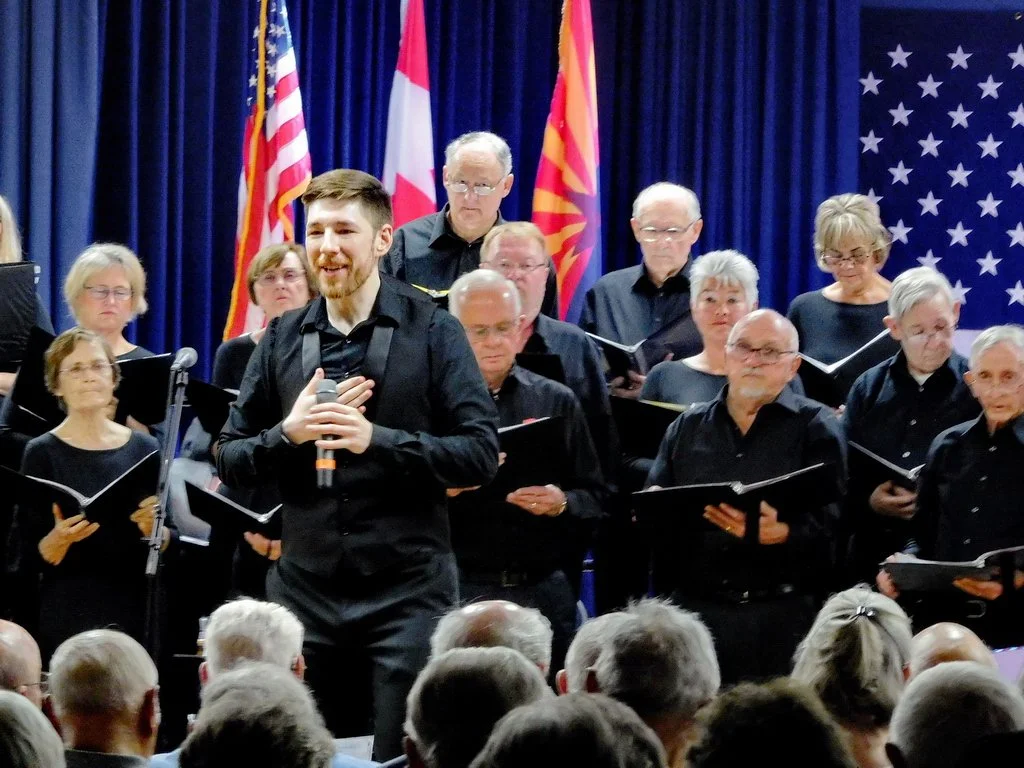
Advice for Choir Conductors and SongLeaders: How to Lead a Community Sing in the Style of Bobby McFerrin’s Circlesongs
What are Bobby McFerrin’s Circlesongs? What is a Community Sing?
Basically, it’s a crossover of the broader concepts of community singing (pre-composed/arranged songs with or without harmony with or without accompaniment sung in large groups of amateurs) and improvisational group singing.
So if you wanted to learn CircleSongs, you could transcribe or learn his parts by ear. However the spirit of the events is for each song to be different and unique to the audience in each performance.

Choosing Repertoire That Actually Works for Your Choir
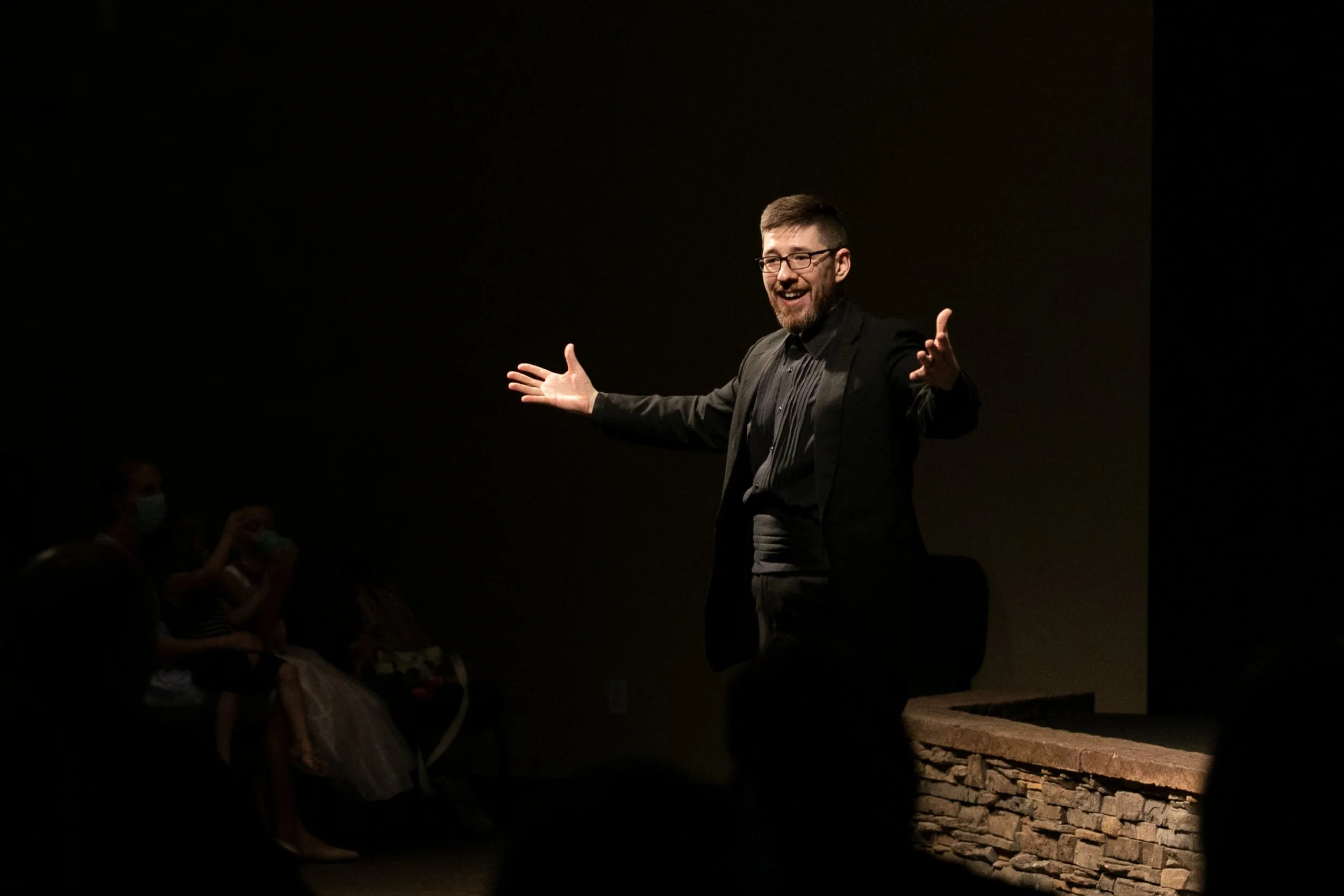
This is the part of being a choir director that we tend to talk about least. We talk about rehearsal technique, audition strategy, conducting craft, recruitment. But repertoire selection is where most of the season's outcome is determined. A great director with bad repertoire produces a frustrated choir. A merely good director with well-chosen repertoire produces a strong season. The repertoire choices you make in summer determine the music your singers actually grow inside of all year.
Advanced Vocal Technique for Choir Singers
Choir singing is one of the most technically demanding vocal disciplines and one of the least understood. Soloists who can deliver an aria flawlessly often cannot blend cleanly in a choral section. The technical demands of ensemble singing are not lower than solo singing; they are different. The vocal habits that produce a great solo voice frequently undermine ensemble cohesion, and the singers who excel at both are the ones who consciously train the choral-specific technical layer.


How to Run a Choir Audition That Doesn't Scare Away the Singers You Need
Every audition you run is filtering not just for talent, but for confidence under audition conditions. Those are two different things, and most directors confuse them. Here's how to design auditions that find the talent you actually need.
The Boys' Changing Voice: How to Work With Male Adolescent Voices Through the Transition
He sang beautifully as a treble for years. He had a clear, ringing soprano or alto sound. He could sustain pitches with confidence. Then, sometime between fourth and eighth grade — or, increasingly often, well outside that traditional window — his voice started changing. His range shrank. His pitches became unstable. The notes he could comfortably sing one week were inaccessible the next. He started cracking embarrassingly in front of his peers. The reliable musician he was disappeared, replaced by a singer who seems to lose his voice every week.

How to Recruit Singers and Grow Your Choir
Look at your own choir. If you're under that number — and most of you probably are — you have room to grow. Recruiting singers is, in most cases, the biggest single job of a working choral director that's most consistently under-invested in. We pour our energy into rehearsing the singers we have. We pick repertoire, we work on technique, we prepare concerts. The active work of bringing new singers into the program tends to be an afterthought, attempted in panicked bursts at the start of each season when we realize the bass section is down to two voices.

How to Teach "Tone-Deaf" Singers to Match Pitch
I have never met a person — child, teenager, adult, senior citizen — who, given the right instruction over a few weeks, could not learn to match pitch and sing in tune at a basic level.
This matters because as a choir director, you almost certainly have one or two singers in your ensemble right now who are described, by themselves or by others, as tone-deaf. They sing flat. They sing the wrong notes. They drone. They distract the singers next to them. And the prevailing wisdom in choral music — particularly in the volunteer and community choir world — is that these singers should either be politely placed in the back where they can't do damage, or, in some cases, asked not to return.
The Concert That Moves People: Beyond Technique to Performance That Audiences Remember
There are technically excellent concerts that leave audiences politely impressed but emotionally untouched. And there are imperfect concerts — concerts with audible flaws, missed entrances, sections that aren't quite together — that leave audiences in tears, or laughing, or filing out of the venue with that particular hush that descends after a real artistic experience.
The Choir Rehearsal That Actually Works: A Working Choral Director's Philosophy and Structure
There are two different choir rehearsals happening across America every week. They look very similar from the outside — same number of singers, similar warm-ups, similar repertoire, similar lengths. But one of them produces singers who develop year over year, can sight-sing their music, hold a tuning fork in their hand and find their starting pitch on their own, and leave the program at the end of the year as more capable musicians than they walked in. The other produces singers who are bored, dependent on the piano, lost when their director isn't visibly leading every breath, and walk out with the same skills they walked in with — having simply learned the specific pieces of music in this year's concerts.
How to Conduct a Choir Rehearsal Without a Pianist
Here's the truth most graduate programs don't prepare you for: you will, at some point in your career, run choir rehearsals without a pianist. Sometimes for a single week. Sometimes for an entire season. The directors who handle this well develop a set of skills that, frankly, every choral director should have anyway. The directors who handle it badly produce rough rehearsals where everyone is frustrated and nothing gets accomplished.