Stop Playing One Emotion Per Scene: How to Color-Code Your Script and Deliver a Performance That Actually Lands
Here's something I see constantly with newer actors: they read a scene, decide it's a "sad scene" or an "angry scene," and then play that single emotion from top to bottom like a sustained note on a piano. It's flat. It's predictable. And it's the fastest way to lose an audience — or a casting director.
Real human beings don't feel one thing at a time. Neither should your characters.
The actors who book work and hold attention on stage are the ones who understand that every scene is a cocktail of competing emotions, and the magic happens in the transitions between them. Here's the framework I use with my students to break that pattern.
Want to work with me one-on-one?
The Emotion Wheel: Your Secret Weapon for Script Analysis
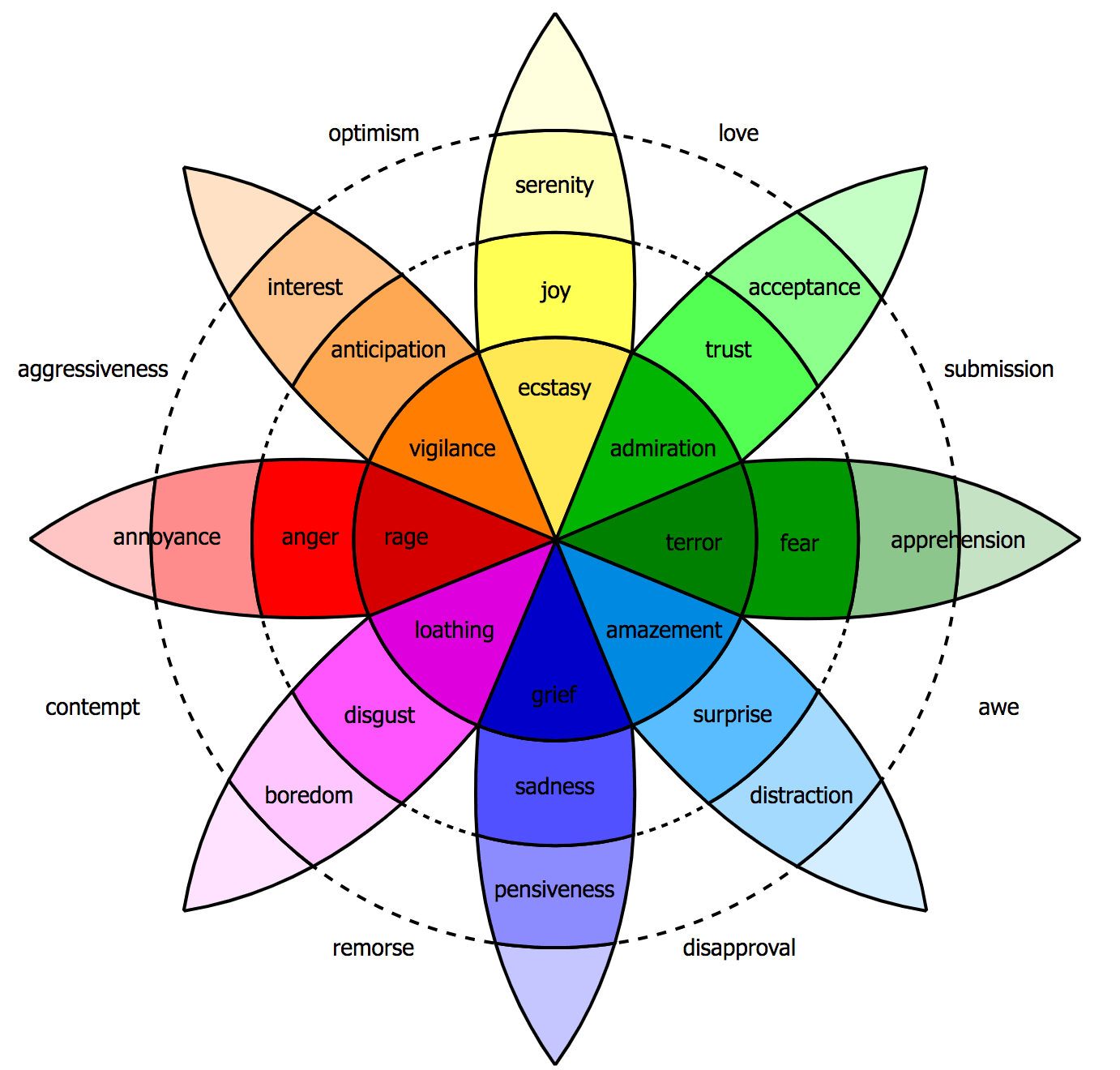
Psychologist Robert Plutchik mapped out eight primary emotions — joy, trust, fear, surprise, sadness, disgust, anger, and anticipation — and arranged them in a wheel that shows how they relate to one another, how they intensify toward the center, and how they combine to create more complex feelings. It's a psychology tool, but for actors, it's pure gold.
Here's how I teach actors to use it as a script analysis framework.
Take your monologue or scene and go through it line by line. For each beat — each shift in thought or intention — assign a color from the wheel. Don't just label the obvious dominant emotion. Ask yourself: what else is here? Because there's always something else.
A character delivering an angry monologue about betrayal isn't just angry. There's sadness underneath that anger — the loss of what they thought they had. There might be disgust at the other person's behavior. There might even be a flicker of fear about what comes next. And if this is someone they still love despite everything? Now you've got anger, sadness, love, and fear all coexisting in the same speech.
That's not confusing. That's human. And that's what makes audiences lean in.
Finding the Emotion You Didn't Expect
The emotions that make a scene interesting are almost never the obvious ones. They're the contradictions.
Consider a scene between two people who love each other but are furious with one another. The surface reads as conflict, but the undercurrent is affection. A performer who only plays the anger misses the whole point. The scene is compelling precisely because the character is torn — they're yelling at someone they'd take a bullet for.
When you're analyzing your script, actively hunt for the emotion that doesn't seem to belong. A tough, confrontational speech that has a moment of tenderness buried in it. A joyful reunion that carries an edge of grief for the time that was lost. A declaration of independence that's secretly terrified.
Those contradictions are where the real performance lives. Find them, and you'll stop delivering scenes that feel like one long emotional statement and start delivering scenes that feel like real people navigating real complexity.
Slow Down (No, Slower Than That)
Speed is the enemy of good acting, especially for newer performers. When you're nervous, when you're trying to remember your lines, when you're focused on getting through the piece — you speed up. And when you speed up, you flatten everything.
Every emotion needs room to breathe. If your character shifts from anger to vulnerability in two lines, the audience needs a moment to see that shift happen. They need the pause. They need the breath. They need to watch it land on your face before they hear it in your voice.
I often tell my students: if you think you're going too slow, you're probably going at about the right speed. And if you think you're going at the right speed, you're almost certainly rushing.
Practice your monologues with deliberate pauses between emotional beats. Not dramatic, self-indulgent pauses — purposeful ones. The kind where your character is actually processing what they're about to say next. The kind where the audience can see the thought forming. Those pauses aren't dead air. They're some of the most active, compelling moments in a performance.
Cry With Your Breath, Not Your Eyes
This is one of the most practical techniques I teach, and it transforms how newer actors handle emotional scenes.
When a script calls for a character to be on the verge of tears — or actively crying — most beginning actors go straight for the eyes. They try to squeeze out real tears, or they scrunch up their face in what they think crying looks like, and the result feels forced because it is forced.
Here's what actually works: focus on the breath and the voice, not the eyes.
Think about what happens to your body when you're genuinely trying not to cry. Your breathing gets shaky. You take sharp, short inhales. You sniff. Your voice catches and cracks on certain words. Your jaw tightens. You swallow hard. All of that is happening below the neck, in the breath and the voice — and the audience reads every bit of it.
A deep, shuddering inhale before a line hits harder than any amount of eye-squinting. A voice that breaks mid-sentence tells the audience everything they need to know without a single tear rolling down your cheek. A quiet sniff between lines can be devastating.
The beauty of this approach is that it's technically reproducible. You can do it on take one and take fifteen. You can do it in a self-tape alone in your bedroom or on a stage in front of five hundred people. And because it comes from the breath — something you can control — it doesn't depend on whether you're genuinely feeling emotional in that moment.
Never Break Character (Especially When You Mess Up)
This separates amateurs from professionals faster than almost anything else.
You're in the middle of a monologue. You stumble on a word. You lose your place for a second. Your instinct screams at you to stop, break eye contact, grimace, maybe laugh it off. Don't.
Stay in character. Recover as the character. If your character would pause and collect themselves, do that. If your character would push through, push through. The audience doesn't have the script in front of them. They don't know you skipped a line or mispronounced a name. What they notice — what immediately pulls them out of the story — is the actor dropping the mask. The moment you break, they see you instead of your character, and the spell is broken.
In an audition, this is even more critical. Casting directors expect mistakes. What they're watching for is how you handle them. An actor who stumbles and stays in the moment demonstrates something more valuable than a perfect read: they demonstrate that they can be trusted on set, where mistakes and surprises happen constantly and the camera keeps rolling.
Practice this deliberately. Run your monologues and intentionally throw yourself off — skip a line, change a word, have a friend make a noise. Then recover without breaking. Make it a skill you own, not something you hope you can do under pressure.
Map the Emotional Arc Before You Memorize
Before you start memorizing a single word, map the emotional journey of your scene. I mean physically write it out: what does your character feel at the beginning, the middle, and the end? Where are the turns? Where does the emotion shift, and what triggers that shift?
This mapping becomes your roadmap for the entire performance. When you memorize lines with the emotional arc already internalized, the delivery comes naturally. You don't have to think about where to pause or when to shift your tone — those choices are baked into your understanding of the piece.
Here's a simple process that works:
Read the full script or scene once without making any choices at all. Just absorb the story. On your second read, note every moment where the character's emotional state changes. These are your beats. For each beat, pull out Plutchik's Wheel and assign the emotions present — not just the dominant one, but all of them. Identify the single biggest emotional shift in the piece. That's your climax, your pivot point. Everything before it builds toward it, and everything after it lives in its aftermath.
Now you have a map. You know where you're going, what the terrain looks like, and where the sharp turns are. That's the foundation for a performance with shape and intention, not just a recitation of words.
Tap Into Your Own Feelings (Even When the Situation Is Different)
Your character may be in a situation you've never experienced. That's fine — you don't need the same situation. You need the same feeling.
If your character just lost someone they love, you don't need to have experienced that exact loss. But you have experienced loss of some kind. A friendship that ended. A pet that died. A phase of your life that's over. The specific circumstances don't matter to the audience — the authenticity of the emotion does.
This isn't the same as reliving trauma on command. It's about recognizing that human emotions are universal, even when the triggers are different. You know what anger feels like in your body. You know the weight of sadness. You know the electric buzz of joy. The acting work is connecting those feelings to your character's circumstances so that what comes out of your mouth has real weight behind it.
When you're working with the Emotion Wheel and you identify that your character is feeling, say, a mix of anger and deep love, ask yourself: when have I felt that combination? Maybe it was a fight with someone close to you. Maybe it was watching someone you care about make a destructive choice. Find your version of that feeling, and let it inform — not dictate — your performance.
Put It All Together
Here's what a solid script analysis process looks like when you combine these tools:
Read the scene cold. Get the story. Read it again and mark the emotional beats — every shift, every turn. Use Plutchik's Wheel to color-code those beats with specific, layered emotions. Identify the contradictions and surprises — the emotions that don't obviously belong but make the character feel real. Map the arc from beginning to end: where does your character start emotionally, and where do they land? Find your personal connection points — your version of each feeling. Now start memorizing, with the emotional architecture already in place. Practice slowly, with real pauses between beats, using breath and voice to carry the emotion.
This process takes more time up front than just memorizing lines and winging it. But the difference in the final performance is night and day. You'll walk into auditions and onto stages with a performance that has depth, specificity, and genuine human complexity — and that's what gets you remembered.
Want to work with me one-on-one?
Looking for more?